


Small Arms Review
  • Home
  • Articles
    • Guns & Parts
    • Suppressors
    • Optics & Thermals
    • Ammunition
    • Gear
    • News & Opinion
    • Columns
    • Museums & Factory Tours
    • ID Guides
    • Interviews
    • Event Coverage
    • Articles by Issue
      • Volume 1
        • V1N1 (Oct 1997)
        • V1N2 (Nov 1997)
        • V1N3 (Dec 1997)
        • V1N4 (Jan 1998)
        • V1N5 (Feb 1998)
        • V1N6 (Mar 1998)
        • V1N7 (Apr 1998)
        • V1N8 (May 1998)
        • V1N9 (Jun 1998)
        • V1N10 (Jul 1998)
        • V1N11 (Aug 1998)
        • V1N12 (Sep 1998)
      • Volume 2
        • V2N1 (Oct 1998)
        • V2N2 (Nov 1998)
        • V2N3 (Dec 1998)
        • V2N4 (Jan 1999)
        • V2N5 (Feb 1999)
        • V2N6 (Mar 1999)
        • V2N7 (Apr 1999)
        • V2N8 (May 1999)
        • V2N9 (Jun 1999)
        • V2N10 (Jul 1999)
        • V2N11 (Aug 1999)
        • V2N12 (Sep 1999)
      • Volume 3
        • V3N1 (Oct 1999)
        • V3N2 (Nov 1999)
        • V3N3 (Dec 1999)
        • V3N4 (Jan 2000)
        • V3N5 (Feb 2000)
        • V3N6 (Mar 2000)
        • V3N7 (Apr 2000)
        • V3N8 (May 2000)
        • V3N9 (Jun 2000)
        • V3N10 (Jul 2000)
        • V3N11 (Aug 2000)
        • V3N12 (Sep 2000)
      • Volume 4
        • V4N1 (Oct 2000)
        • V4N2 (Nov 2000)
        • V4N3 (Dec 2000)
        • V4N4 (Jan 2001)
        • V4N5 (Feb 2001)
        • V4N6 (Mar 2001)
        • V4N7 (Apr 2001)
        • V4N8 (May 2001)
        • V4N9 (Jun 2001)
        • V4N10 (Jul 2001)
        • V4N11 (Aug 2001)
        • V4N12 (Sep 2001)
      • Volume 5
        • V5N1 (Oct 2001)
        • V5N2 (Nov 2001)
        • V5N3 (Dec 2001)
        • V5N4 (Jan 2002)
        • V5N5 (Feb 2002)
        • V5N6 (Mar 2002)
        • V5N7 (Apr 2002)
        • V5N8 (May 2002)
        • V5N9 (Jun 2002)
        • V5N10 (Jul 2002)
        • V5N11 (Aug 2002)
        • V5N12 (Sep 2002)
      • Volume 6
        • V6N1 (Oct 2002)
        • V6N2 (Nov 2002)
        • V6N3 (Dec 2002)
        • V6N4 (Jan 2003)
        • V6N5 (Feb 2003)
        • V6N6 (Mar 2003)
        • V6N7 (Apr 2003)
        • V6N8 (May 2003)
        • V6N9 (Jun 2003)
        • V6N10 (Jul 2003)
        • V6N11 (Aug 2003)
        • V6N12 (Sep 2003)
      • Volume 7
        • V7N1 (Oct 2003)
        • V7N2 (Nov 2003)
        • V7N3 (Dec 2003)
        • V7N4 (Jan 2004)
        • V7N5 (Feb 2004)
        • V7N6 (Mar 2004)
        • V7N7 (Apr 2004)
        • V7N8 (May 2004)
        • V7N9 (Jun 2004)
        • V7N10 (Jul 2004)
        • V7N11 (Aug 2004)
        • V7N12 (Sep 2004)
      • Volume 8
        • V8N1 (Oct 2004)
        • V8N2 (Nov 2004)
        • V8N3 (Dec 2004)
        • V8N4 (Jan 2005)
        • V8N5 (Feb 2005)
        • V8N6 (Mar 2005)
        • V8N7 (Apr 2005)
        • V8N8 (May 2005)
        • V8N9 (Jun 2005)
        • V8N10 (Jul 2005)
        • V8N11 (Aug 2005)
        • V8N12 (Sep 2005)
      • Volume 9
        • V9N1 (Oct 2005)
        • V9N2 (Nov 2005)
        • V9N3 (Dec 2005)
        • V9N4 (Jan 2006)
        • V9N5 (Feb 2006)
        • V9N6 (Mar 2006)
        • V9N7 (Apr 2006)
        • V9N8 (May 2006)
        • V9N9 (Jun 2006)
        • V9N10 (Jul 2006)
        • V9N11 (Aug 2006)
        • V9N12 (Sep 2006)
      • Volume 10
        • V10N1 (Oct 2006)
        • V10N2 (Nov 2006)
        • V10N3 (Dec 2006)
        • V10N4 (Jan 2007)
        • V10N5 (Feb 2007)
        • V10N6 (Mar 2007)
        • V10N7 (Apr 2007)
        • V10N8 (May 2007)
        • V10N9 (Jun 2007)
        • V10N10 (Jul 2007)
        • V10N11 (Aug 2007)
        • V10N12 (Sep 2007)
      • Volume 11
        • V11N1 (Oct 2007)
        • V11N2 (Nov 2007)
        • V11N3 (Dec 2007)
        • V11N4 (Jan 2008)
        • V11N5 (Feb 2008)
        • V11N6 (Mar 2008)
        • V11N7 (Apr 2008)
        • V11N8 (May 2008)
        • V11N9 (Jun 2008)
        • V11N10 (Jul 2008)
        • V11N11 (Aug 2008)
        • V11N12 (Sep 2008)
      • Volume 12
        • V12N1 (Oct 2008)
        • V12N2 (Nov 2008)
        • V12N3 (Dec 2008)
        • V12N4 (Jan 2009)
        • V12N5 (Feb 2009)
        • V12N6 (Mar 2009)
        • V12N7 (Apr 2009)
        • V12N8 (May 2009)
        • V12N9 (Jun 2009)
        • V12N10 (Jul 2009)
        • V12N11 (Aug 2009)
        • V12N12 (Sep 2009)
      • Volume 13
        • V13N1 (Oct 2009)
        • V13N2 (Nov 2009)
        • V13N3 (Dec 2009)
        • V13N4 (Jan 2010)
        • V13N5 (Feb 2010)
        • V13N6 (Mar 2010)
        • V13N7 (Apr 2010)
        • V13N8 (May 2010)
        • V13N9 (Jun 2010)
        • V13N10 (Jul 2010)
        • V13N11 (Aug 2010)
        • V13N12 (Sep 2010)
      • Volume 14
        • V14N1 (Oct 2010)
        • V14N2 (Nov 2010)
        • V14N3 (Dec 2010)
          • Ammunition
        • V14N4 (Jan 2011)
        • V14N5 (Feb 2011)
        • V14N6 (Mar 2011)
        • V14N7 (Apr 2011)
        • V14N8 (May 2011)
        • V14N9 (Jun 2011)
        • V14N10 (Jul 2011)
        • V14N11 (Aug 2011)
        • V14N12 (Sep 2011)
      • Volume 15
        • V15N1 (Oct 2011)
        • V15N2 (Nov 2011)
        • V15N4 (Jan 2012)
        • V15N5 (Feb 2012)
      • Volume 16
        • V16N1 (1st Quarter 2012)
        • V16N2 (2nd Quarter 2012)
        • V16N3 (3rd Quarter 2012)
        • V16N4 (4th Quarter 2012)
      • Volume 17
        • V17N1 (1st Quarter 2013)
        • V17N2 (2nd Quarter 2013)
        • V17N3 (3rd Quarter 2013)
        • V17N4 (4th Quarter 2013)
      • Volume 18
        • V18N1 (Jan Feb 2014)
        • V18N2 (Mar Apr 2014)
        • V18N3 (May Jun 2014)
        • V18N4 (Jul Aug 2014)
        • V18N5 (Sep Oct 2014)
        • V18N6 (Nov Dec 2014)
      • Volume 19
        • V19N1 (Jan 2015)
        • V19N2 (Feb Mar 2015)
        • V19N3 (Apr 2015)
        • V19N4 (May 2015)
        • V19N5 (Jun 2015)
        • V19N6 (Jul 2015)
        • V19N7 (Aug Sep 2015)
        • V19N8 (Oct 2015)
        • V19N9 (Nov 2015)
        • V19N10 (Dec 2015)
      • Volume 20
        • V20N1 (Jan 2016)
        • V20N2 (Feb Mar 2016)
        • V20N3 (Apr 2016)
        • V20N4 (May 2016)
        • V20N5 (Jun 2016)
        • V20N6 (Jul 2016)
        • V20N7 (Aug Sep 2016)
        • V20N8 (Oct 2016)
        • V20N9 (Nov 2016)
        • V20N10 (Dec 2016)
      • Volume 21
        • V21N1 (Jan 2017)
        • V21N2 (Feb Mar 2017)
        • V21N3 (Apr 2017)
        • V21N4 (May 2017)
        • V21N5 (Jun 2017)
        • V21N6 (Jul 2017)
        • V21N7 (Aug Sep 2017)
        • V21N8 (Oct 2017)
        • V21N9 (Nov 2017)
        • V21N10 (Dec 2017)
      • Volume 22
        • V22N1 (Jan 2018)
        • V22N2 (Feb 2018)
        • V22N3 (March 2018)
        • V22N4 (Apr 2018)
        • V22N5 (May 2018)
        • V22N6 (Jun Jul 2018)
        • V22N7 (Aug Sep 2018)
        • V22N8 (Oct 2018)
        • V22N9 (Nov 2018)
        • V22N10 (Dec 2018)
      • Volume 23
        • V23N1 (Jan 2019)
        • V23N2 (Feb 2019)
        • V23N3 (Mar 2019)
        • V23N4 (Apr 2019)
        • V23N5 (May 2019)
        • V23N6 (Jun Jul 2019)
        • V23N7 (Aug Sep 2019)
        • V23N8 (Oct 2019)
        • V23N9 (Nov 2019)
        • V23N10 (Dec 2019)
      • Volume 24
        • V24N1 (Jan 2020)
        • V24N2 (Feb 2020)
        • V24N3 (Mar 2020)
        • V24N4 (Apr 2020)
        • V24N5 (May 2020)
        • V24N6 (Jun Jul 2020)
        • V24N7 (Aug Sep 2020)
        • V24N8 (Oct 2020)
        • V24N9 (Nov 2020)
        • V24N10 (Dec 2020)
  • The Archive
    • Search The Archive
  • Store
    • Books
    • Back Issues
    • Merchandise
  • Events
  • About
    • About Small Arms Review
    • About Chipotle Publishing
    • Contact Us
    • Other Publications
      • Small Arms Defense Journal
  • Home
  • Articles
    • Guns & Parts
    • Suppressors
    • Optics & Thermals
    • Ammunition
    • Gear
    • News & Opinion
    • Columns
    • Museums & Factory Tours
    • ID Guides
    • Interviews
    • Event Coverage
    • Articles by Issue
      • Volume 1
        • V1N1 (Oct 1997)
        • V1N2 (Nov 1997)
        • V1N3 (Dec 1997)
        • V1N4 (Jan 1998)
        • V1N5 (Feb 1998)
        • V1N6 (Mar 1998)
        • V1N7 (Apr 1998)
        • V1N8 (May 1998)
        • V1N9 (Jun 1998)
        • V1N10 (Jul 1998)
        • V1N11 (Aug 1998)
        • V1N12 (Sep 1998)
      • Volume 2
        • V2N1 (Oct 1998)
        • V2N2 (Nov 1998)
        • V2N3 (Dec 1998)
        • V2N4 (Jan 1999)
        • V2N5 (Feb 1999)
        • V2N6 (Mar 1999)
        • V2N7 (Apr 1999)
        • V2N8 (May 1999)
        • V2N9 (Jun 1999)
        • V2N10 (Jul 1999)
        • V2N11 (Aug 1999)
        • V2N12 (Sep 1999)
      • Volume 3
        • V3N1 (Oct 1999)
        • V3N2 (Nov 1999)
        • V3N3 (Dec 1999)
        • V3N4 (Jan 2000)
        • V3N5 (Feb 2000)
        • V3N6 (Mar 2000)
        • V3N7 (Apr 2000)
        • V3N8 (May 2000)
        • V3N9 (Jun 2000)
        • V3N10 (Jul 2000)
        • V3N11 (Aug 2000)
        • V3N12 (Sep 2000)
      • Volume 4
        • V4N1 (Oct 2000)
        • V4N2 (Nov 2000)
        • V4N3 (Dec 2000)
        • V4N4 (Jan 2001)
        • V4N5 (Feb 2001)
        • V4N6 (Mar 2001)
        • V4N7 (Apr 2001)
        • V4N8 (May 2001)
        • V4N9 (Jun 2001)
        • V4N10 (Jul 2001)
        • V4N11 (Aug 2001)
        • V4N12 (Sep 2001)
      • Volume 5
        • V5N1 (Oct 2001)
        • V5N2 (Nov 2001)
        • V5N3 (Dec 2001)
        • V5N4 (Jan 2002)
        • V5N5 (Feb 2002)
        • V5N6 (Mar 2002)
        • V5N7 (Apr 2002)
        • V5N8 (May 2002)
        • V5N9 (Jun 2002)
        • V5N10 (Jul 2002)
        • V5N11 (Aug 2002)
        • V5N12 (Sep 2002)
      • Volume 6
        • V6N1 (Oct 2002)
        • V6N2 (Nov 2002)
        • V6N3 (Dec 2002)
        • V6N4 (Jan 2003)
        • V6N5 (Feb 2003)
        • V6N6 (Mar 2003)
        • V6N7 (Apr 2003)
        • V6N8 (May 2003)
        • V6N9 (Jun 2003)
        • V6N10 (Jul 2003)
        • V6N11 (Aug 2003)
        • V6N12 (Sep 2003)
      • Volume 7
        • V7N1 (Oct 2003)
        • V7N2 (Nov 2003)
        • V7N3 (Dec 2003)
        • V7N4 (Jan 2004)
        • V7N5 (Feb 2004)
        • V7N6 (Mar 2004)
        • V7N7 (Apr 2004)
        • V7N8 (May 2004)
        • V7N9 (Jun 2004)
        • V7N10 (Jul 2004)
        • V7N11 (Aug 2004)
        • V7N12 (Sep 2004)
      • Volume 8
        • V8N1 (Oct 2004)
        • V8N2 (Nov 2004)
        • V8N3 (Dec 2004)
        • V8N4 (Jan 2005)
        • V8N5 (Feb 2005)
        • V8N6 (Mar 2005)
        • V8N7 (Apr 2005)
        • V8N8 (May 2005)
        • V8N9 (Jun 2005)
        • V8N10 (Jul 2005)
        • V8N11 (Aug 2005)
        • V8N12 (Sep 2005)
      • Volume 9
        • V9N1 (Oct 2005)
        • V9N2 (Nov 2005)
        • V9N3 (Dec 2005)
        • V9N4 (Jan 2006)
        • V9N5 (Feb 2006)
        • V9N6 (Mar 2006)
        • V9N7 (Apr 2006)
        • V9N8 (May 2006)
        • V9N9 (Jun 2006)
        • V9N10 (Jul 2006)
        • V9N11 (Aug 2006)
        • V9N12 (Sep 2006)
      • Volume 10
        • V10N1 (Oct 2006)
        • V10N2 (Nov 2006)
        • V10N3 (Dec 2006)
        • V10N4 (Jan 2007)
        • V10N5 (Feb 2007)
        • V10N6 (Mar 2007)
        • V10N7 (Apr 2007)
        • V10N8 (May 2007)
        • V10N9 (Jun 2007)
        • V10N10 (Jul 2007)
        • V10N11 (Aug 2007)
        • V10N12 (Sep 2007)
      • Volume 11
        • V11N1 (Oct 2007)
        • V11N2 (Nov 2007)
        • V11N3 (Dec 2007)
        • V11N4 (Jan 2008)
        • V11N5 (Feb 2008)
        • V11N6 (Mar 2008)
        • V11N7 (Apr 2008)
        • V11N8 (May 2008)
        • V11N9 (Jun 2008)
        • V11N10 (Jul 2008)
        • V11N11 (Aug 2008)
        • V11N12 (Sep 2008)
      • Volume 12
        • V12N1 (Oct 2008)
        • V12N2 (Nov 2008)
        • V12N3 (Dec 2008)
        • V12N4 (Jan 2009)
        • V12N5 (Feb 2009)
        • V12N6 (Mar 2009)
        • V12N7 (Apr 2009)
        • V12N8 (May 2009)
        • V12N9 (Jun 2009)
        • V12N10 (Jul 2009)
        • V12N11 (Aug 2009)
        • V12N12 (Sep 2009)
      • Volume 13
        • V13N1 (Oct 2009)
        • V13N2 (Nov 2009)
        • V13N3 (Dec 2009)
        • V13N4 (Jan 2010)
        • V13N5 (Feb 2010)
        • V13N6 (Mar 2010)
        • V13N7 (Apr 2010)
        • V13N8 (May 2010)
        • V13N9 (Jun 2010)
        • V13N10 (Jul 2010)
        • V13N11 (Aug 2010)
        • V13N12 (Sep 2010)
      • Volume 14
        • V14N1 (Oct 2010)
        • V14N2 (Nov 2010)
        • V14N3 (Dec 2010)
          • Ammunition
        • V14N4 (Jan 2011)
        • V14N5 (Feb 2011)
        • V14N6 (Mar 2011)
        • V14N7 (Apr 2011)
        • V14N8 (May 2011)
        • V14N9 (Jun 2011)
        • V14N10 (Jul 2011)
        • V14N11 (Aug 2011)
        • V14N12 (Sep 2011)
      • Volume 15
        • V15N1 (Oct 2011)
        • V15N2 (Nov 2011)
        • V15N4 (Jan 2012)
        • V15N5 (Feb 2012)
      • Volume 16
        • V16N1 (1st Quarter 2012)
        • V16N2 (2nd Quarter 2012)
        • V16N3 (3rd Quarter 2012)
        • V16N4 (4th Quarter 2012)
      • Volume 17
        • V17N1 (1st Quarter 2013)
        • V17N2 (2nd Quarter 2013)
        • V17N3 (3rd Quarter 2013)
        • V17N4 (4th Quarter 2013)
      • Volume 18
        • V18N1 (Jan Feb 2014)
        • V18N2 (Mar Apr 2014)
        • V18N3 (May Jun 2014)
        • V18N4 (Jul Aug 2014)
        • V18N5 (Sep Oct 2014)
        • V18N6 (Nov Dec 2014)
      • Volume 19
        • V19N1 (Jan 2015)
        • V19N2 (Feb Mar 2015)
        • V19N3 (Apr 2015)
        • V19N4 (May 2015)
        • V19N5 (Jun 2015)
        • V19N6 (Jul 2015)
        • V19N7 (Aug Sep 2015)
        • V19N8 (Oct 2015)
        • V19N9 (Nov 2015)
        • V19N10 (Dec 2015)
      • Volume 20
        • V20N1 (Jan 2016)
        • V20N2 (Feb Mar 2016)
        • V20N3 (Apr 2016)
        • V20N4 (May 2016)
        • V20N5 (Jun 2016)
        • V20N6 (Jul 2016)
        • V20N7 (Aug Sep 2016)
        • V20N8 (Oct 2016)
        • V20N9 (Nov 2016)
        • V20N10 (Dec 2016)
      • Volume 21
        • V21N1 (Jan 2017)
        • V21N2 (Feb Mar 2017)
        • V21N3 (Apr 2017)
        • V21N4 (May 2017)
        • V21N5 (Jun 2017)
        • V21N6 (Jul 2017)
        • V21N7 (Aug Sep 2017)
        • V21N8 (Oct 2017)
        • V21N9 (Nov 2017)
        • V21N10 (Dec 2017)
      • Volume 22
        • V22N1 (Jan 2018)
        • V22N2 (Feb 2018)
        • V22N3 (March 2018)
        • V22N4 (Apr 2018)
        • V22N5 (May 2018)
        • V22N6 (Jun Jul 2018)
        • V22N7 (Aug Sep 2018)
        • V22N8 (Oct 2018)
        • V22N9 (Nov 2018)
        • V22N10 (Dec 2018)
      • Volume 23
        • V23N1 (Jan 2019)
        • V23N2 (Feb 2019)
        • V23N3 (Mar 2019)
        • V23N4 (Apr 2019)
        • V23N5 (May 2019)
        • V23N6 (Jun Jul 2019)
        • V23N7 (Aug Sep 2019)
        • V23N8 (Oct 2019)
        • V23N9 (Nov 2019)
        • V23N10 (Dec 2019)
      • Volume 24
        • V24N1 (Jan 2020)
        • V24N2 (Feb 2020)
        • V24N3 (Mar 2020)
        • V24N4 (Apr 2020)
        • V24N5 (May 2020)
        • V24N6 (Jun Jul 2020)
        • V24N7 (Aug Sep 2020)
        • V24N8 (Oct 2020)
        • V24N9 (Nov 2020)
        • V24N10 (Dec 2020)
  • The Archive
    • Search The Archive
  • Store
    • Books
    • Back Issues
    • Merchandise
  • Events
  • About
    • About Small Arms Review
    • About Chipotle Publishing
    • Contact Us
    • Other Publications
      • Small Arms Defense Journal
No Result
View All Result
Small Arms Review
No Result
View All Result
Home Product Review

The New Light and Handy Ruger American Generation II Ranch Rifle

by Todd Burgreen
April 16, 2024
in Product Review
The New Light and Handy Ruger American Generation II Ranch Rifle

The Ruger American Generation II Ranch’s buttstock has a removable section. I used this feature to fit the rifle to my daughter-in-law. Reducing the length-of-pull to around 12-inches allowed her to manage the rifle much better. (Todd Burgreen)

Share on FacebookShare on Twitter

Nowadays, what comes to mind when “bolt-action rifle” is mentioned? I’d venture to say an image of a 26-inch heavy-profile barreled-action mated to a stout stock appears in your thoughts—à la tactical sniper rifle. Or how about an even longer barrel inside a stock, perfect for attaching a bipod or laying on bags to adapt to barriers, along with an optic that looks like a converted spotting scope? Where are we going with this?

With “black rifles” dominating the gun media, it’s easy to forget that other types of rifles exist. It’s nice to have the opportunity to remind you that there are rifles that offer real world usefulness beyond the AR. My own initial interest in firearms began with bolt-action hunting rifles.

Ruger American Ranch

This article is inspired by the rifles carried by the guides and cowboys I spent time with out in Wyoming or down in Texas for multiple hunts over the years. I was fortunate to have been part of a select group to first hunt with the Ruger American Generation II (RA Gen2) Standard back in October 2023. We used the bolt action American Standard Gen2 chambered in 6.5 Creedmoor chasing after scimitar oryx down in Texas. The outfitter and guides all were excited when they were briefed at the time on the upcoming release of the shorter-barreled “Ranch” model. This experience left no doubt about wanting to try the compact Ruger American Generation II (RA Gen2) Ranch as soon as it became available. An American Gen2 Ranch chambered in 300 AAC Blackout (300 Blk) was used for this evaluation. Several other calibers are available.
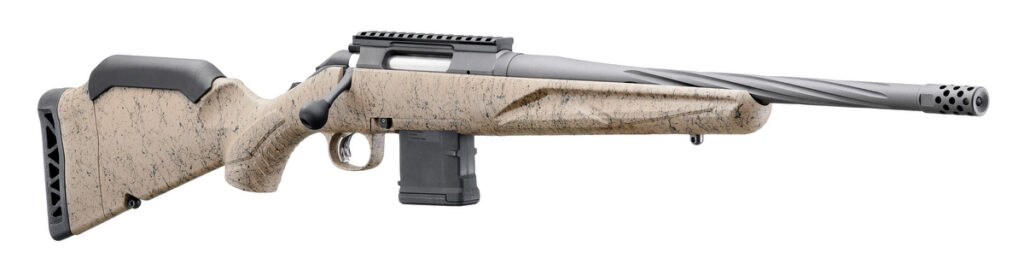
The Ruger American Generation II is unrecognizable from its Gen I predecessor. (Ruger)

The Ruger American Gen2 is unrecognizable from its Gen1 predecessor. A new stock features a Monte Carlo-esq contoured, raised cheekpiece. Length-of-pull and comb height is adjustable. The ergonomics of the stock allow for a comfortable, repeatable cheek weld combined with hand and finger placement conducive to pulling the 3- to 4-pound Ruger Marksman adjustable trigger. Ruger designed the Gen2 stock so a section can be removed, and the length-of-pull reduced to 12 inches. This is ideal for smaller statured hunters.

As detailed in a previous article in SAR covering the American Standard Gen2, the American Gen2 Ranch also uses Ruger’s patented “Power Bedding” integral bedding block system. It secures the receiver and free-floats the cold-hammer-forged barrel for improved accuracy. The 16-inch spiral-fluted cold-hammer-forged barrel will raise eyebrows with its aesthetics. The well done Cerakote finish is easy on the eyes and provides superior, easy to maintain finish. Suppressors and muzzle brakes are gaining popularity. The barrel is threaded and arrives wearing a radial muzzle brake.

The Ruger Marksman trigger features a distinctive release lever on the trigger shoe. This is the secret to maintaining minimal, creep-free trigger weight while keeping the system safe. The release lever must be activated (by pulling the trigger) before the sear will move and fire the cartridge.

The RA Gen2’s steel receiver is topped with a factory-installed optics rail compatible with Picatinny-type scope mounting systems. This simplifies optic mounting. The single-piece, three-lug bolt cycles smoothly and features a full diameter bolt body, dual cocking cams and an oversized bolt knob that can be unscrewed and replaced by the end user. The bolt’s 70-degree throw keeps it clear of a mounted optic. Ruger has improved the finish on the bolt action for a smoother feel during manipulation. Tighter overall tolerances (including chamber) boosts accuracy potential. A 10-round, detachable Magpul P-MAG magazine feeds rounds into the chamber.
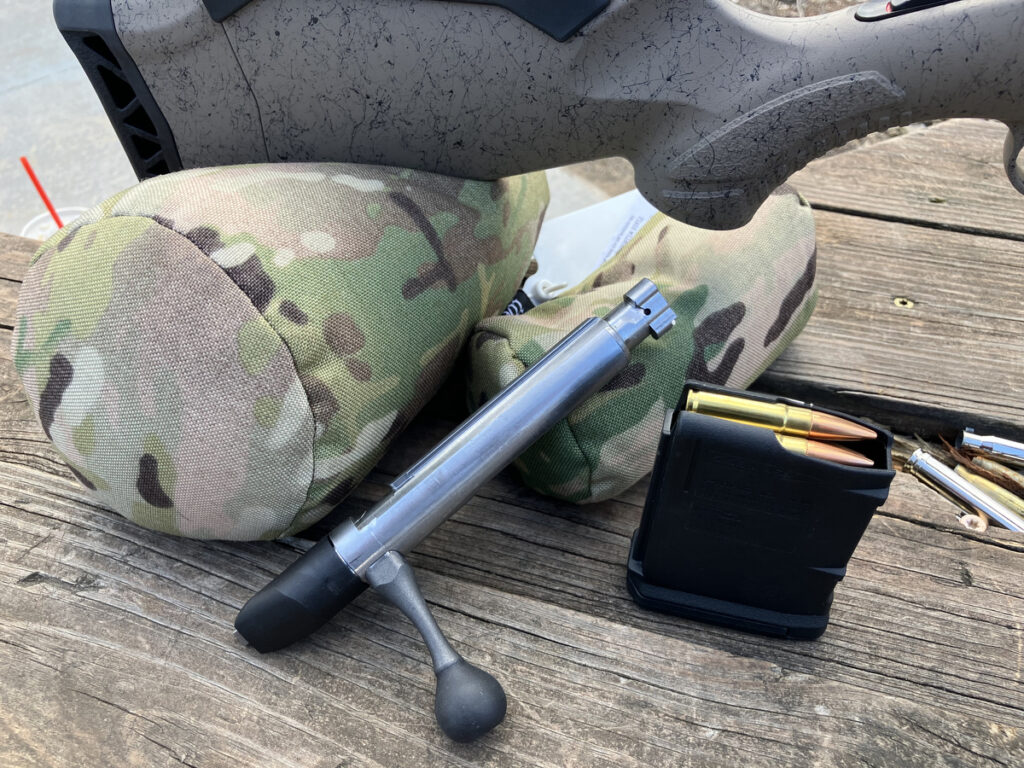
The Ruger American Generation II Ranch uses a single-piece, three-lug bolt. Ruger has improved finish on the bolt action for smoother manipulation. (Todd Burgreen)

A tang-mounted safety completes the action. The RA Gen2’s safety has three positions—forward (for fire), middle (where the bolt can still move), and rear (locks the bolt down). This is an important detail that Ruger listened to their customer base about and changed from the Ruger American Standard Gen1. If you have ever been afield in thick terrain or jostled around on an ATV, you know a bolt can be inadvertently opened, dropping round out and/or collecting debris in the action. This can pose a problem when the rifle needs to be deployed in quickly.

MISSION DRIVES THE GEAR

This is where 300 Blk comes into the story. The decision to go with a RA Gen2 Ranch chambered in 300 Blk may surprise some. 300 Blk is more associated with AR platforms. However, a better mixture of classic bolt with utilitarian cartridge would be hard to come by. 300 Blk was, essentially, a rebadging of J.D. Jones’ 300 Whisper cartridge that was introduced in a SAMMI-accepted package for use by U.S. Special Operation Command. Anecdotal information compares standard velocity 300 Blk 115- to 125-grain ammunition as exceeding the ballistic performance of the 7.62×39 mm and eclipses 5.56 NATO both in ballistic and terminal performance. At 300 yards, 300 Blk has approximately 17 percent more energy than 7.62×39 mm thanks to its higher ballistic coefficient (BC), more aerodynamically shaped bullets.

One interesting twist with the 300 Blk is the ability to choose factory loaded subsonic cartridges for optimal use with a sound suppressor. The ability to access a plethora of either supersonic or subsonic factory ammunition offers great flexibility to the 300 Blk user. A 300 Blk bolt action with a suppressor firing subsonic ammunition creates a combination capable of “Hollywood quiet” performance.

Mounting a suppressor for everyday use is growing more popular. I’m pleasantly surprised by the number of suppressors witnessed when I’m out hunting now. An Aero Precision Lahar-30 suppressor was chosen for use with the RA Gen2 Ranch. The Lahar-30 features a laser welded combination of 17-4 stainless steel blast chamber and secondary baffles with an Inconel blast baffle to provide increased performance under hard use. The Lahar-30 has no minimum barrel length restrictions and is full-auto rated. It is rated for calibers up to 300 Win Mag and weighs 15.4 ounces.

The compact RA Gen2 Ranch wearing an Aero Precision Lahar-30 suppressor is a true utility rifle riding horseback in a scabbard, secured to an ATV gunrack, or resting on a truck seat. Having a separate magazine with subsonic rounds is a good option to have. A close range shot of 50 yards and in can be taken without disturbing domesticated animals or alerting the animal being targeted, which is especially beneficial if more than one target is present.

SCOPING UP

I decided to use an optic basic with the RA Gen2 Ranch. I mounted a Leupold VX-Freedom 3-9x. My plan for the rifle was two-fold. First, was to use it according to its “Ranch” moniker at a piece of property in West Virginia. When on a 4-wheeler, ATV, and walk-about, it’s always nice to have a rifle brought along.
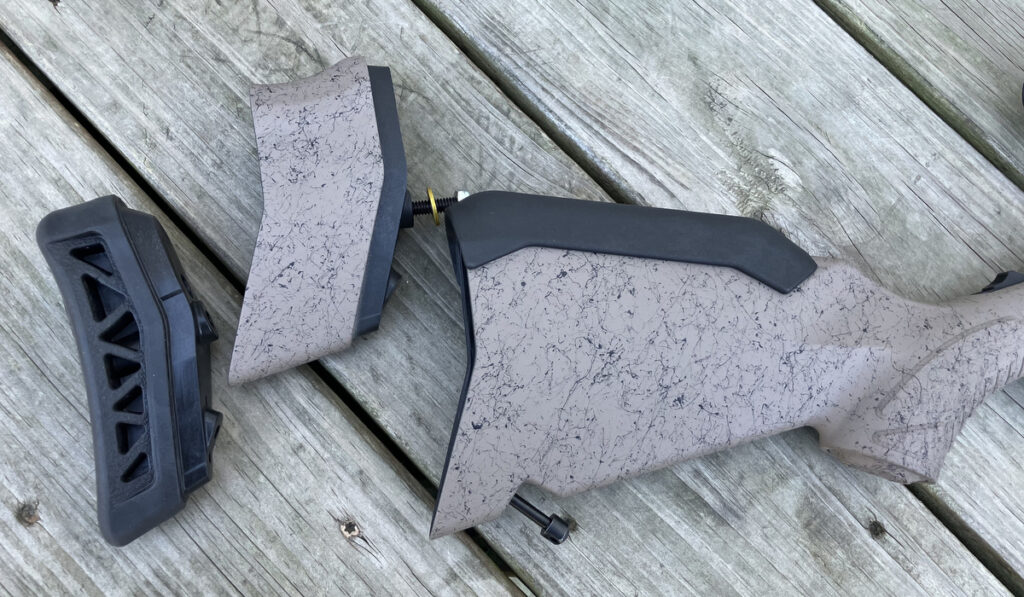
Ruger has equipped the Ruger American Generation II Ranch with a removable section of buttstocvk to length of pull can be reduced to 12-inches for shooters of smaller stature. (Todd Burgreen)

Second, was to turn the RA Gen2 Ranch into a better fitting hunting rifle for one of my daughters-in-law. Ruger has equipped the RA Gen2 Ranch with a removable section of buttstock. I took advantage of it to better fit her smaller stature. By reducing the length-of-pull to around 12-inches, she can manage the rifle much better, including finding quarry in the Leupold scope more easily by not have to crane her neck awkwardly.

AMMUNITION VARIETY
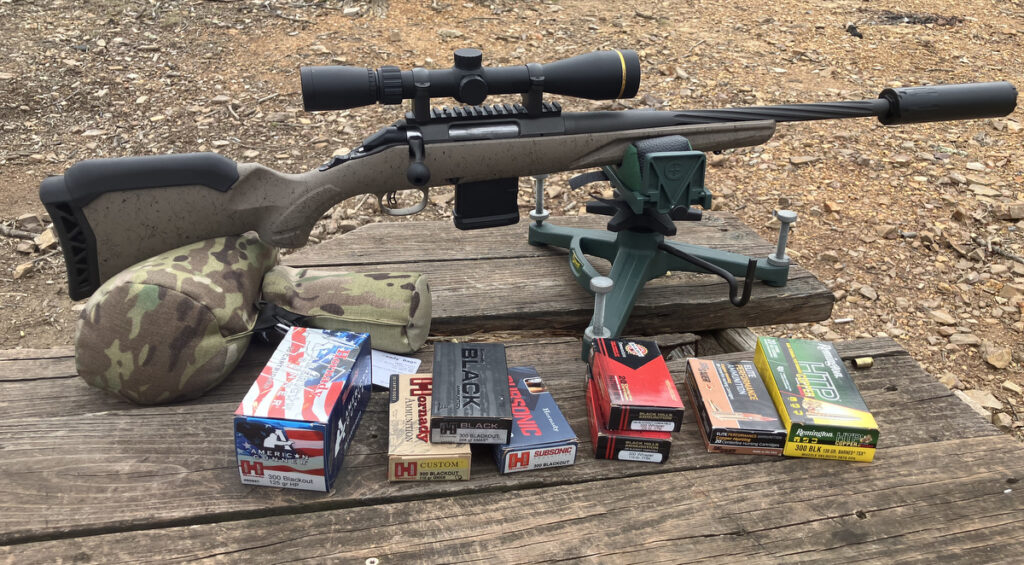
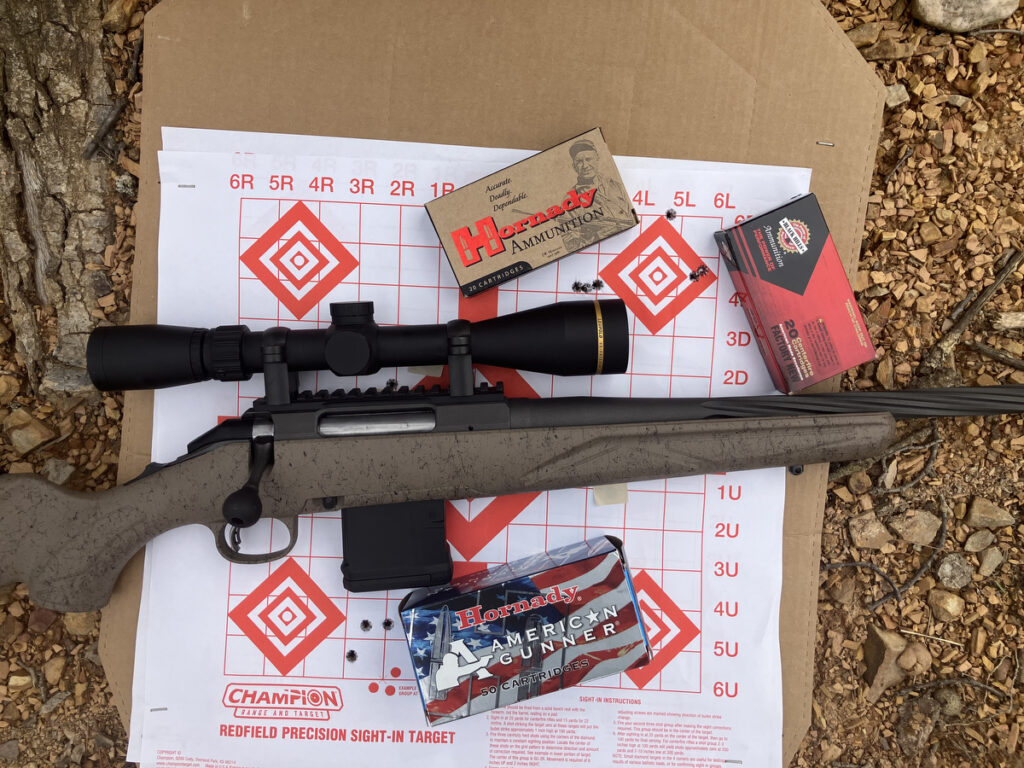
The Ruger American Generation II Ranch was tested from the bench for accuracy and around barricades and other obstacles to get a better appreciation of its handling and performance. The Aero Precision Lahar-30 suppressor was mounted for most of the testing. (Todd Burgreen)

Various ammunition was tested with the RA Gen2 Ranch including Hornady supersonic 125-grain HP and 110-grain GMX, subsonic 208-grain AMAX and 190-grain Sub-X, SIG SAUER Elite 120-grain HT, Black Hills Ammunition 110-grain TTSX and 220-grain OTM, and Federal Fusion 150-grain SP to name a few. Most of the range time, albeit bench or more dynamic use, included use with the Aero Precision Lahar suppressor.

I want to highlight Hornady’s Sub-X 300 Blk load. The unique load consists of a 190-grain bullet designed specifically to perform at subsonic velocities. A cannelure groove is present for a positive case crimp. The Sub-X bullet combines a lead core surrounded by a grooved metal jacket and tipped with the company’s patented “Flex Tip” insert. Long grooves scored into the Sub-X metal jacket combined with a flat base create conditions for reliable expansion. The Flex Tip insert placed in front of hollow point cavity kicks expansion off when striking a target. The Flex Tip also prevents material from clogging a hollow point, which sometimes prevents expansion. Hornady made sure the performance of the new load meets or exceeds the FBI requirements for terminal ballistic performance. Additionally, a low flash signature makes the ammo ideal for both suppressed and unsuppressed firearms when used in low-light environments.
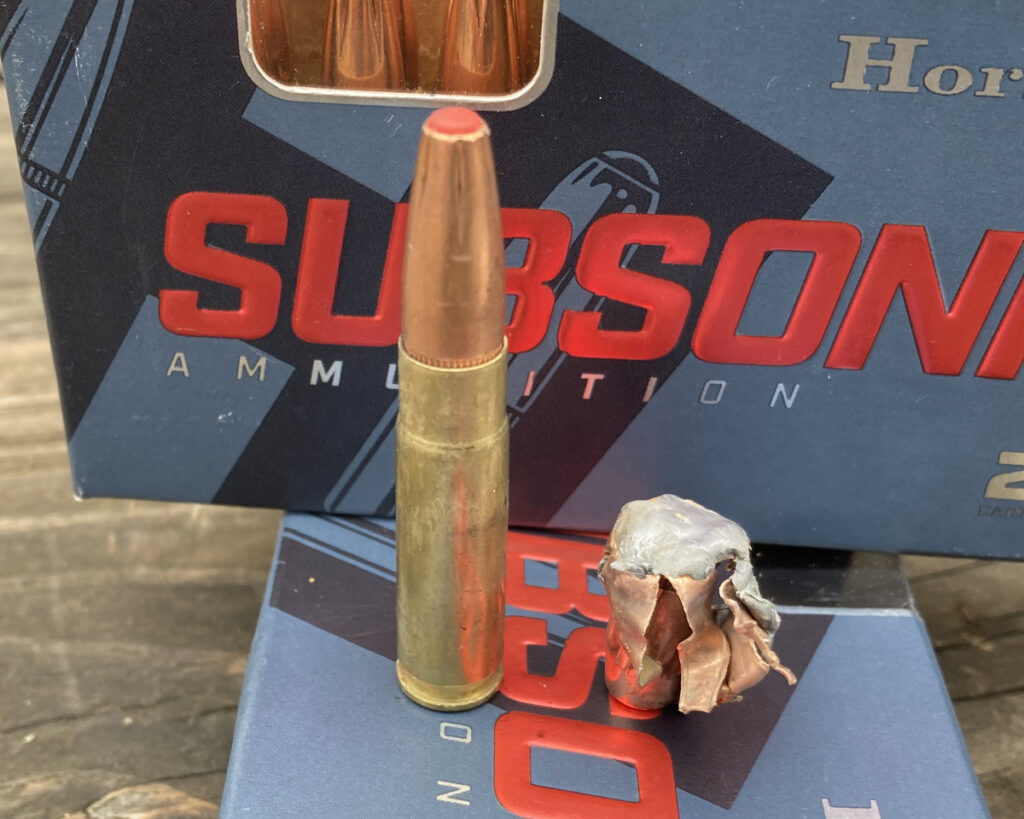
Here’s a new Hornady Sub-X 300 Blk 190-grain cartridge alongside a recovered bullet showing its terminal performance. (Todd Burgreen)

Let’s point out the ballistic performance of subsonic 300 Blk loads resembles that of a pistol round. For comparison’s sake, a 230-grain 45 ACP generates 461 ft/lbs. of energy. The Hornady 190-grain Sub-X, 465 ft/lbs. All things being equal, a high sectional density (SD) bullet penetrates better than a low SD. BC is a measurement of how efficiently a bullet moves thru the air. Superior ballistic coefficients (.437 190-grain (300 Blk) bullet versus a .188 (45 ACP) bullet) and sectional densities (SD .286 versus .162) help the Hornady 190-grain Sub-X maintain energy and penetration characteristics further downrange than a typical pistol bullet. However, the use case for subsonic 300 Blk loads should be carefully considered since the round’s terminal effect isn’t as great as that of a typical supersonic rifle round.

BOOM TIME, QUIETLY

The RA Gen2 Ranch was tested from the bench for accuracy and around barricades and other obstacles to get a better appreciation of its handling and performance. The Lahar-30 suppressor was mounted for most of the testing. Steel targets were smacked with ease out to 150 yards using field expedient rests. While by no means rivaling a semi-automatic for fire power, the detachable ten-round magazines were handy to recharge the rifle after the last round. As expected from a bolt-action, no malfunctions were experienced. One note here is that when the last round was ejected, the bolt will not close on the empty magazine. The safety made no audible noise during manipulation, an important consideration for hunting or defensive use.
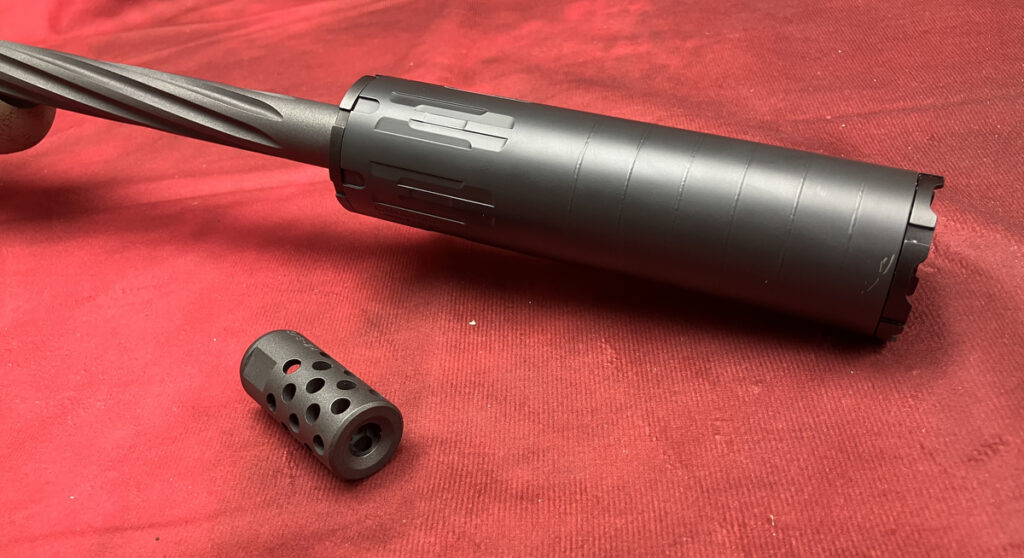
An Aero Precision Lahar-30 suppressor direct threaded on the Ruger American Generation II Ranch’s muzzle. (Todd Burgreen)

The Aero Precision Lahar suppressor was directly threaded to the Ruger barrel and weighs 15.4 ounces. This translates into minimal interference with the rifle’s handling characteristics while still offering a six-baffle design that drops the decibel level down to approximately 135dB. Recoil was not a factor, especially with the suppressor mounted, which was especially appreciated when set up for use by one of my daughters-in-law.

PERFORMANCE

 Avg. Velocity (fps)Avg. 3-Shot Group @ 100-yd (in.)Best 3-Shot Group @ 100-yd (in.)
Hornady 110gr GMX22371.250.875
Hornady 125gr HP21591.50.812
Black Hills 110gr TTSX22861.330.93
SIG Sauer 120gr HT22421.251.0
Examples of three-round groups we printed with the Ruger American Generation II Ranch. (Todd Burgreen)

I chose a 150-yard zero after considering the caliber and the rifle’s role. Roughly speaking, a 150-yard zero with 110- to 125-grain 300 Blk loads shoot pretty flat out to 200 yards, dropping only 4.5 inches. Three-round groups at 100 yards were in the 1.25- to 1.5-inch range. Group size remained consistent with or without the Aero Precision suppressor. Shifts in point of impact were minimal, as well, which adds to the convenience of running the rifle with and without the suppressor.

Field testing consisted of Echo Valley Training Center’s Jungle Walk range. The ability to move through its varied terrain and engage randomly placed deer, coyote, and raccoon targets hidden within cover suited my RA Gen2 Ranch 300 Blk evaluation perfectly. Ranges involved were 35 to 150 yards with multiple shots fired at most of the targets. The emphasis was on working the Ruger American’s bolt without removing the rifle from my shoulder.
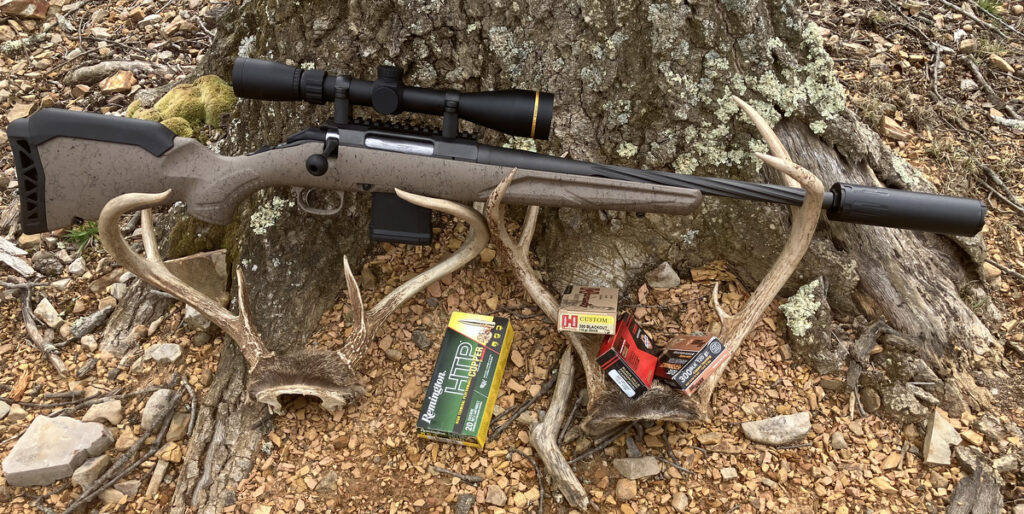
It’s hard to believe that a anyone using the Ruger American Generation II Ranch in 300 AAC Blackout is ever under-gunned when hunting deer size game or pressed into other duties. (Todd Burgreen)

I also loaded magazines with Hornady 190-grain Sub-X. The focus was making sure reliability was maintained and how far I could push the velocity-challenged subsonic rounds. Engagement distances were kept 100 yard and in, mostly with targets placed between 25 and 75 yards. The round’s trajectory was surprisingly flat out to 50 yards. 100-yard bullet strikes were approximately 7-inches low with the 50-yard, subsonic zero.

THE WALKBACK

The 300 Blk in the bolt action Ruger American Generation II Ranch offers .30 caliber performance in a compact, 6-pound rifle. The RA Gen2 Ranch is a solid working companion worthy of its “Ranch” designation. No need for a super-magnum rifle with a mega-zoom scope and hyper-complicated reticle. I find it hard to believe that anyone using the RA Gen2 Ranch 300 Blk is ever under-gunned when hunting deer-size game or pressed into other duties. I believe the Ruger American Generation II Ranch will find a niche among ranchers and outdoorsmen that will appreciate the rifle for its efficiency.

SPECIFICATIONS

MakeRuger
ModelAmerican Generation II Ranch
Caliber300 AAC Blackout
Weight (empty)6.2 lb.
Overall Length37.35 in.
Barrel16.1 in.
Capacity10-round detachable magazine
MSRP$729
URLRuger American Generation II Ranch

Author

  • Todd Burgreen
    Todd Burgreen

    View all posts
Tags: 300 BlkBolt-ActionRifleRugerRUGER AMERICAN
Previous Post

Firearms’ Safeties: Some work. Some, Not So Much 

Next Post

Emmageeman’s Corner: Machine Gun Memorabilia

Next Post
Emmageeman’s Corner: Machine Gun Memorabilia

Emmageeman's Corner: Machine Gun Memorabilia

TRENDING STORIES

  • The New Light and Handy Ruger American Generation II Ranch Rifle

    The New Light and Handy Ruger American Generation II Ranch Rifle

    0 shares
    Share 0 Tweet 0
  • True to Form: The Tisas 1911A1 ASF

    0 shares
    Share 0 Tweet 0
  • Winchester Model 70 Alaskan .375 Return of the Rifleman’s Rifle

    0 shares
    Share 0 Tweet 0
  • The Alofs Reloading Magazine for Shotguns

    0 shares
    Share 0 Tweet 0
  • The Complete Guide To Colt M-16 Models: Part I

    0 shares
    Share 0 Tweet 0

RECENT POSTS

SIG Sauer’s Full-Size Compact P365 “Fuse”

SIG Sauer’s Full-Size Compact P365 “Fuse”

June 27, 2024
The Importance of Offhand Shooting

The Importance of Offhand Shooting

June 25, 2024
BOOK REVIEW – The Collector’s Guide to the SKS

BOOK REVIEW – The Collector’s Guide to the SKS

June 20, 2024
True to Form: The Tisas 1911A1 ASF

True to Form: The Tisas 1911A1 ASF

June 18, 2024
Setting the Record Straight on the Fedorov Avtomat

Setting the Record Straight on the Fedorov Avtomat

June 6, 2024

QUICK LINKS

  • About Chipotle Publishing
  • About Small Arms Review
  • Advertise with Us
  • Write for Us

CONTACT DETAILS

  • Phone: +1 (702) 565-0746
  • E-mail: office@smallarmsreview.com
  • Web: www.chipotlepublishing.com
  • Chipotle Publishing, LLC 631 N. Stephanie St., No. 282, Henderson, NV 89014
Small Arms Review

FOLLOW US

  • Privacy Policy
  • Disclaimer

© 2022 Chipotle Publishing | All Rights Reserved

Welcome Back!

Login to your account below

Forgotten Password?

Retrieve your password

Please enter your username or email address to reset your password.

Log In

Add New Playlist

No Result
View All Result
  • Home
  • Articles
    • Guns & Parts
    • Suppressors
    • Optics & Thermals
    • Ammunition
    • Gear
    • News & Opinion
    • Columns
    • Museums & Factory Tours
    • ID Guides
    • Interviews
    • Event Coverage
    • Articles by Issue
      • Volume 1
      • Volume 2
      • Volume 3
      • Volume 4
      • Volume 5
      • Volume 6
      • Volume 7
      • Volume 8
      • Volume 9
      • Volume 10
      • Volume 11
      • Volume 12
      • Volume 13
      • Volume 14
      • Volume 15
      • Volume 16
      • Volume 17
      • Volume 18
      • Volume 19
      • Volume 20
      • Volume 21
      • Volume 22
      • Volume 23
      • Volume 24
  • The Archive
    • Search The Archive
  • Store
    • Books
    • Back Issues
    • Merchandise
  • Events
  • About
    • About Small Arms Review
    • About Chipotle Publishing
    • Contact Us
    • Other Publications
      • Small Arms Defense Journal

© 2022 Chipotle Publishing | All Rights Reserved

This website uses cookies. By continuing to use this website you are giving consent to cookies being used. Visit our Privacy and Cookie Policy.

Redirecting to External Website

You are leaving the Small Arms Review website and will be redirected to an external link in a 5 Seconds.
VISIT NOW!