

Small Arms Review
  • Home
  • Articles
    • Guns & Parts
    • Suppressors
    • Optics & Thermals
    • Ammunition
    • Gear
    • News & Opinion
    • Columns
    • Museums & Factory Tours
    • ID Guides
    • Interviews
    • Event Coverage
    • Articles by Issue
      • Volume 1
        • V1N1 (Oct 1997)
        • V1N2 (Nov 1997)
        • V1N3 (Dec 1997)
        • V1N4 (Jan 1998)
        • V1N5 (Feb 1998)
        • V1N6 (Mar 1998)
        • V1N7 (Apr 1998)
        • V1N8 (May 1998)
        • V1N9 (Jun 1998)
        • V1N10 (Jul 1998)
        • V1N11 (Aug 1998)
        • V1N12 (Sep 1998)
      • Volume 2
        • V2N1 (Oct 1998)
        • V2N2 (Nov 1998)
        • V2N3 (Dec 1998)
        • V2N4 (Jan 1999)
        • V2N5 (Feb 1999)
        • V2N6 (Mar 1999)
        • V2N7 (Apr 1999)
        • V2N8 (May 1999)
        • V2N9 (Jun 1999)
        • V2N10 (Jul 1999)
        • V2N11 (Aug 1999)
        • V2N12 (Sep 1999)
      • Volume 3
        • V3N1 (Oct 1999)
        • V3N2 (Nov 1999)
        • V3N3 (Dec 1999)
        • V3N4 (Jan 2000)
        • V3N5 (Feb 2000)
        • V3N6 (Mar 2000)
        • V3N7 (Apr 2000)
        • V3N8 (May 2000)
        • V3N9 (Jun 2000)
        • V3N10 (Jul 2000)
        • V3N11 (Aug 2000)
        • V3N12 (Sep 2000)
      • Volume 4
        • V4N1 (Oct 2000)
        • V4N2 (Nov 2000)
        • V4N3 (Dec 2000)
        • V4N4 (Jan 2001)
        • V4N5 (Feb 2001)
        • V4N6 (Mar 2001)
        • V4N7 (Apr 2001)
        • V4N8 (May 2001)
        • V4N9 (Jun 2001)
        • V4N10 (Jul 2001)
        • V4N11 (Aug 2001)
        • V4N12 (Sep 2001)
      • Volume 5
        • V5N1 (Oct 2001)
        • V5N2 (Nov 2001)
        • V5N3 (Dec 2001)
        • V5N4 (Jan 2002)
        • V5N5 (Feb 2002)
        • V5N6 (Mar 2002)
        • V5N7 (Apr 2002)
        • V5N8 (May 2002)
        • V5N9 (Jun 2002)
        • V5N10 (Jul 2002)
        • V5N11 (Aug 2002)
        • V5N12 (Sep 2002)
      • Volume 6
        • V6N1 (Oct 2002)
        • V6N2 (Nov 2002)
        • V6N3 (Dec 2002)
        • V6N4 (Jan 2003)
        • V6N5 (Feb 2003)
        • V6N6 (Mar 2003)
        • V6N7 (Apr 2003)
        • V6N8 (May 2003)
        • V6N9 (Jun 2003)
        • V6N10 (Jul 2003)
        • V6N11 (Aug 2003)
        • V6N12 (Sep 2003)
      • Volume 7
        • V7N1 (Oct 2003)
        • V7N2 (Nov 2003)
        • V7N3 (Dec 2003)
        • V7N4 (Jan 2004)
        • V7N5 (Feb 2004)
        • V7N6 (Mar 2004)
        • V7N7 (Apr 2004)
        • V7N8 (May 2004)
        • V7N9 (Jun 2004)
        • V7N10 (Jul 2004)
        • V7N11 (Aug 2004)
        • V7N12 (Sep 2004)
      • Volume 8
        • V8N1 (Oct 2004)
        • V8N2 (Nov 2004)
        • V8N3 (Dec 2004)
        • V8N4 (Jan 2005)
        • V8N5 (Feb 2005)
        • V8N6 (Mar 2005)
        • V8N7 (Apr 2005)
        • V8N8 (May 2005)
        • V8N9 (Jun 2005)
        • V8N10 (Jul 2005)
        • V8N11 (Aug 2005)
        • V8N12 (Sep 2005)
      • Volume 9
        • V9N1 (Oct 2005)
        • V9N2 (Nov 2005)
        • V9N3 (Dec 2005)
        • V9N4 (Jan 2006)
        • V9N5 (Feb 2006)
        • V9N6 (Mar 2006)
        • V9N7 (Apr 2006)
        • V9N8 (May 2006)
        • V9N9 (Jun 2006)
        • V9N10 (Jul 2006)
        • V9N11 (Aug 2006)
        • V9N12 (Sep 2006)
      • Volume 10
        • V10N1 (Oct 2006)
        • V10N2 (Nov 2006)
        • V10N3 (Dec 2006)
        • V10N4 (Jan 2007)
        • V10N5 (Feb 2007)
        • V10N6 (Mar 2007)
        • V10N7 (Apr 2007)
        • V10N8 (May 2007)
        • V10N9 (Jun 2007)
        • V10N10 (Jul 2007)
        • V10N11 (Aug 2007)
        • V10N12 (Sep 2007)
      • Volume 11
        • V11N1 (Oct 2007)
        • V11N2 (Nov 2007)
        • V11N3 (Dec 2007)
        • V11N4 (Jan 2008)
        • V11N5 (Feb 2008)
        • V11N6 (Mar 2008)
        • V11N7 (Apr 2008)
        • V11N8 (May 2008)
        • V11N9 (Jun 2008)
        • V11N10 (Jul 2008)
        • V11N11 (Aug 2008)
        • V11N12 (Sep 2008)
      • Volume 12
        • V12N1 (Oct 2008)
        • V12N2 (Nov 2008)
        • V12N3 (Dec 2008)
        • V12N4 (Jan 2009)
        • V12N5 (Feb 2009)
        • V12N6 (Mar 2009)
        • V12N7 (Apr 2009)
        • V12N8 (May 2009)
        • V12N9 (Jun 2009)
        • V12N10 (Jul 2009)
        • V12N11 (Aug 2009)
        • V12N12 (Sep 2009)
      • Volume 13
        • V13N1 (Oct 2009)
        • V13N2 (Nov 2009)
        • V13N3 (Dec 2009)
        • V13N4 (Jan 2010)
        • V13N5 (Feb 2010)
        • V13N6 (Mar 2010)
        • V13N7 (Apr 2010)
        • V13N8 (May 2010)
        • V13N9 (Jun 2010)
        • V13N10 (Jul 2010)
        • V13N11 (Aug 2010)
        • V13N12 (Sep 2010)
      • Volume 14
        • V14N1 (Oct 2010)
        • V14N2 (Nov 2010)
        • V14N3 (Dec 2010)
          • Ammunition
        • V14N4 (Jan 2011)
        • V14N5 (Feb 2011)
        • V14N6 (Mar 2011)
        • V14N7 (Apr 2011)
        • V14N8 (May 2011)
        • V14N9 (Jun 2011)
        • V14N10 (Jul 2011)
        • V14N11 (Aug 2011)
        • V14N12 (Sep 2011)
      • Volume 15
        • V15N1 (Oct 2011)
        • V15N2 (Nov 2011)
        • V15N4 (Jan 2012)
        • V15N5 (Feb 2012)
      • Volume 16
        • V16N1 (1st Quarter 2012)
        • V16N2 (2nd Quarter 2012)
        • V16N3 (3rd Quarter 2012)
        • V16N4 (4th Quarter 2012)
      • Volume 17
        • V17N1 (1st Quarter 2013)
        • V17N2 (2nd Quarter 2013)
        • V17N3 (3rd Quarter 2013)
        • V17N4 (4th Quarter 2013)
      • Volume 18
        • V18N1 (Jan Feb 2014)
        • V18N2 (Mar Apr 2014)
        • V18N3 (May Jun 2014)
        • V18N4 (Jul Aug 2014)
        • V18N5 (Sep Oct 2014)
        • V18N6 (Nov Dec 2014)
      • Volume 19
        • V19N1 (Jan 2015)
        • V19N2 (Feb Mar 2015)
        • V19N3 (Apr 2015)
        • V19N4 (May 2015)
        • V19N5 (Jun 2015)
        • V19N6 (Jul 2015)
        • V19N7 (Aug Sep 2015)
        • V19N8 (Oct 2015)
        • V19N9 (Nov 2015)
        • V19N10 (Dec 2015)
      • Volume 20
        • V20N1 (Jan 2016)
        • V20N2 (Feb Mar 2016)
        • V20N3 (Apr 2016)
        • V20N4 (May 2016)
        • V20N5 (Jun 2016)
        • V20N6 (Jul 2016)
        • V20N7 (Aug Sep 2016)
        • V20N8 (Oct 2016)
        • V20N9 (Nov 2016)
        • V20N10 (Dec 2016)
      • Volume 21
        • V21N1 (Jan 2017)
        • V21N2 (Feb Mar 2017)
        • V21N3 (Apr 2017)
        • V21N4 (May 2017)
        • V21N5 (Jun 2017)
        • V21N6 (Jul 2017)
        • V21N7 (Aug Sep 2017)
        • V21N8 (Oct 2017)
        • V21N9 (Nov 2017)
        • V21N10 (Dec 2017)
      • Volume 22
        • V22N1 (Jan 2018)
        • V22N2 (Feb 2018)
        • V22N3 (March 2018)
        • V22N4 (Apr 2018)
        • V22N5 (May 2018)
        • V22N6 (Jun Jul 2018)
        • V22N7 (Aug Sep 2018)
        • V22N8 (Oct 2018)
        • V22N9 (Nov 2018)
        • V22N10 (Dec 2018)
      • Volume 23
        • V23N1 (Jan 2019)
        • V23N2 (Feb 2019)
        • V23N3 (Mar 2019)
        • V23N4 (Apr 2019)
        • V23N5 (May 2019)
        • V23N6 (Jun Jul 2019)
        • V23N7 (Aug Sep 2019)
        • V23N8 (Oct 2019)
        • V23N9 (Nov 2019)
        • V23N10 (Dec 2019)
      • Volume 24
        • V24N1 (Jan 2020)
        • V24N2 (Feb 2020)
        • V24N3 (Mar 2020)
        • V24N4 (Apr 2020)
        • V24N5 (May 2020)
        • V24N6 (Jun Jul 2020)
        • V24N7 (Aug Sep 2020)
        • V24N8 (Oct 2020)
        • V24N9 (Nov 2020)
        • V24N10 (Dec 2020)
  • The Archive
    • Search The Archive
  • Store
    • Books
    • Back Issues
    • Merchandise
  • Events
  • About
    • About Small Arms Review
    • About Chipotle Publishing
    • Contact Us
    • Other Publications
      • Small Arms Defense Journal
  • Home
  • Articles
    • Guns & Parts
    • Suppressors
    • Optics & Thermals
    • Ammunition
    • Gear
    • News & Opinion
    • Columns
    • Museums & Factory Tours
    • ID Guides
    • Interviews
    • Event Coverage
    • Articles by Issue
      • Volume 1
        • V1N1 (Oct 1997)
        • V1N2 (Nov 1997)
        • V1N3 (Dec 1997)
        • V1N4 (Jan 1998)
        • V1N5 (Feb 1998)
        • V1N6 (Mar 1998)
        • V1N7 (Apr 1998)
        • V1N8 (May 1998)
        • V1N9 (Jun 1998)
        • V1N10 (Jul 1998)
        • V1N11 (Aug 1998)
        • V1N12 (Sep 1998)
      • Volume 2
        • V2N1 (Oct 1998)
        • V2N2 (Nov 1998)
        • V2N3 (Dec 1998)
        • V2N4 (Jan 1999)
        • V2N5 (Feb 1999)
        • V2N6 (Mar 1999)
        • V2N7 (Apr 1999)
        • V2N8 (May 1999)
        • V2N9 (Jun 1999)
        • V2N10 (Jul 1999)
        • V2N11 (Aug 1999)
        • V2N12 (Sep 1999)
      • Volume 3
        • V3N1 (Oct 1999)
        • V3N2 (Nov 1999)
        • V3N3 (Dec 1999)
        • V3N4 (Jan 2000)
        • V3N5 (Feb 2000)
        • V3N6 (Mar 2000)
        • V3N7 (Apr 2000)
        • V3N8 (May 2000)
        • V3N9 (Jun 2000)
        • V3N10 (Jul 2000)
        • V3N11 (Aug 2000)
        • V3N12 (Sep 2000)
      • Volume 4
        • V4N1 (Oct 2000)
        • V4N2 (Nov 2000)
        • V4N3 (Dec 2000)
        • V4N4 (Jan 2001)
        • V4N5 (Feb 2001)
        • V4N6 (Mar 2001)
        • V4N7 (Apr 2001)
        • V4N8 (May 2001)
        • V4N9 (Jun 2001)
        • V4N10 (Jul 2001)
        • V4N11 (Aug 2001)
        • V4N12 (Sep 2001)
      • Volume 5
        • V5N1 (Oct 2001)
        • V5N2 (Nov 2001)
        • V5N3 (Dec 2001)
        • V5N4 (Jan 2002)
        • V5N5 (Feb 2002)
        • V5N6 (Mar 2002)
        • V5N7 (Apr 2002)
        • V5N8 (May 2002)
        • V5N9 (Jun 2002)
        • V5N10 (Jul 2002)
        • V5N11 (Aug 2002)
        • V5N12 (Sep 2002)
      • Volume 6
        • V6N1 (Oct 2002)
        • V6N2 (Nov 2002)
        • V6N3 (Dec 2002)
        • V6N4 (Jan 2003)
        • V6N5 (Feb 2003)
        • V6N6 (Mar 2003)
        • V6N7 (Apr 2003)
        • V6N8 (May 2003)
        • V6N9 (Jun 2003)
        • V6N10 (Jul 2003)
        • V6N11 (Aug 2003)
        • V6N12 (Sep 2003)
      • Volume 7
        • V7N1 (Oct 2003)
        • V7N2 (Nov 2003)
        • V7N3 (Dec 2003)
        • V7N4 (Jan 2004)
        • V7N5 (Feb 2004)
        • V7N6 (Mar 2004)
        • V7N7 (Apr 2004)
        • V7N8 (May 2004)
        • V7N9 (Jun 2004)
        • V7N10 (Jul 2004)
        • V7N11 (Aug 2004)
        • V7N12 (Sep 2004)
      • Volume 8
        • V8N1 (Oct 2004)
        • V8N2 (Nov 2004)
        • V8N3 (Dec 2004)
        • V8N4 (Jan 2005)
        • V8N5 (Feb 2005)
        • V8N6 (Mar 2005)
        • V8N7 (Apr 2005)
        • V8N8 (May 2005)
        • V8N9 (Jun 2005)
        • V8N10 (Jul 2005)
        • V8N11 (Aug 2005)
        • V8N12 (Sep 2005)
      • Volume 9
        • V9N1 (Oct 2005)
        • V9N2 (Nov 2005)
        • V9N3 (Dec 2005)
        • V9N4 (Jan 2006)
        • V9N5 (Feb 2006)
        • V9N6 (Mar 2006)
        • V9N7 (Apr 2006)
        • V9N8 (May 2006)
        • V9N9 (Jun 2006)
        • V9N10 (Jul 2006)
        • V9N11 (Aug 2006)
        • V9N12 (Sep 2006)
      • Volume 10
        • V10N1 (Oct 2006)
        • V10N2 (Nov 2006)
        • V10N3 (Dec 2006)
        • V10N4 (Jan 2007)
        • V10N5 (Feb 2007)
        • V10N6 (Mar 2007)
        • V10N7 (Apr 2007)
        • V10N8 (May 2007)
        • V10N9 (Jun 2007)
        • V10N10 (Jul 2007)
        • V10N11 (Aug 2007)
        • V10N12 (Sep 2007)
      • Volume 11
        • V11N1 (Oct 2007)
        • V11N2 (Nov 2007)
        • V11N3 (Dec 2007)
        • V11N4 (Jan 2008)
        • V11N5 (Feb 2008)
        • V11N6 (Mar 2008)
        • V11N7 (Apr 2008)
        • V11N8 (May 2008)
        • V11N9 (Jun 2008)
        • V11N10 (Jul 2008)
        • V11N11 (Aug 2008)
        • V11N12 (Sep 2008)
      • Volume 12
        • V12N1 (Oct 2008)
        • V12N2 (Nov 2008)
        • V12N3 (Dec 2008)
        • V12N4 (Jan 2009)
        • V12N5 (Feb 2009)
        • V12N6 (Mar 2009)
        • V12N7 (Apr 2009)
        • V12N8 (May 2009)
        • V12N9 (Jun 2009)
        • V12N10 (Jul 2009)
        • V12N11 (Aug 2009)
        • V12N12 (Sep 2009)
      • Volume 13
        • V13N1 (Oct 2009)
        • V13N2 (Nov 2009)
        • V13N3 (Dec 2009)
        • V13N4 (Jan 2010)
        • V13N5 (Feb 2010)
        • V13N6 (Mar 2010)
        • V13N7 (Apr 2010)
        • V13N8 (May 2010)
        • V13N9 (Jun 2010)
        • V13N10 (Jul 2010)
        • V13N11 (Aug 2010)
        • V13N12 (Sep 2010)
      • Volume 14
        • V14N1 (Oct 2010)
        • V14N2 (Nov 2010)
        • V14N3 (Dec 2010)
          • Ammunition
        • V14N4 (Jan 2011)
        • V14N5 (Feb 2011)
        • V14N6 (Mar 2011)
        • V14N7 (Apr 2011)
        • V14N8 (May 2011)
        • V14N9 (Jun 2011)
        • V14N10 (Jul 2011)
        • V14N11 (Aug 2011)
        • V14N12 (Sep 2011)
      • Volume 15
        • V15N1 (Oct 2011)
        • V15N2 (Nov 2011)
        • V15N4 (Jan 2012)
        • V15N5 (Feb 2012)
      • Volume 16
        • V16N1 (1st Quarter 2012)
        • V16N2 (2nd Quarter 2012)
        • V16N3 (3rd Quarter 2012)
        • V16N4 (4th Quarter 2012)
      • Volume 17
        • V17N1 (1st Quarter 2013)
        • V17N2 (2nd Quarter 2013)
        • V17N3 (3rd Quarter 2013)
        • V17N4 (4th Quarter 2013)
      • Volume 18
        • V18N1 (Jan Feb 2014)
        • V18N2 (Mar Apr 2014)
        • V18N3 (May Jun 2014)
        • V18N4 (Jul Aug 2014)
        • V18N5 (Sep Oct 2014)
        • V18N6 (Nov Dec 2014)
      • Volume 19
        • V19N1 (Jan 2015)
        • V19N2 (Feb Mar 2015)
        • V19N3 (Apr 2015)
        • V19N4 (May 2015)
        • V19N5 (Jun 2015)
        • V19N6 (Jul 2015)
        • V19N7 (Aug Sep 2015)
        • V19N8 (Oct 2015)
        • V19N9 (Nov 2015)
        • V19N10 (Dec 2015)
      • Volume 20
        • V20N1 (Jan 2016)
        • V20N2 (Feb Mar 2016)
        • V20N3 (Apr 2016)
        • V20N4 (May 2016)
        • V20N5 (Jun 2016)
        • V20N6 (Jul 2016)
        • V20N7 (Aug Sep 2016)
        • V20N8 (Oct 2016)
        • V20N9 (Nov 2016)
        • V20N10 (Dec 2016)
      • Volume 21
        • V21N1 (Jan 2017)
        • V21N2 (Feb Mar 2017)
        • V21N3 (Apr 2017)
        • V21N4 (May 2017)
        • V21N5 (Jun 2017)
        • V21N6 (Jul 2017)
        • V21N7 (Aug Sep 2017)
        • V21N8 (Oct 2017)
        • V21N9 (Nov 2017)
        • V21N10 (Dec 2017)
      • Volume 22
        • V22N1 (Jan 2018)
        • V22N2 (Feb 2018)
        • V22N3 (March 2018)
        • V22N4 (Apr 2018)
        • V22N5 (May 2018)
        • V22N6 (Jun Jul 2018)
        • V22N7 (Aug Sep 2018)
        • V22N8 (Oct 2018)
        • V22N9 (Nov 2018)
        • V22N10 (Dec 2018)
      • Volume 23
        • V23N1 (Jan 2019)
        • V23N2 (Feb 2019)
        • V23N3 (Mar 2019)
        • V23N4 (Apr 2019)
        • V23N5 (May 2019)
        • V23N6 (Jun Jul 2019)
        • V23N7 (Aug Sep 2019)
        • V23N8 (Oct 2019)
        • V23N9 (Nov 2019)
        • V23N10 (Dec 2019)
      • Volume 24
        • V24N1 (Jan 2020)
        • V24N2 (Feb 2020)
        • V24N3 (Mar 2020)
        • V24N4 (Apr 2020)
        • V24N5 (May 2020)
        • V24N6 (Jun Jul 2020)
        • V24N7 (Aug Sep 2020)
        • V24N8 (Oct 2020)
        • V24N9 (Nov 2020)
        • V24N10 (Dec 2020)
  • The Archive
    • Search The Archive
  • Store
    • Books
    • Back Issues
    • Merchandise
  • Events
  • About
    • About Small Arms Review
    • About Chipotle Publishing
    • Contact Us
    • Other Publications
      • Small Arms Defense Journal
No Result
View All Result
Small Arms Review
No Result
View All Result
Home Articles

INSURGENT ARSENAL OF FALLUJAH

by SAR Staff
October 1, 2011
in Articles, Articles by Issue, Guns & Parts, Search by Issue, V15N1 (Oct 2011), Volume 15
INSURGENT ARSENAL OF FALLUJAH
Share on FacebookShare on Twitter

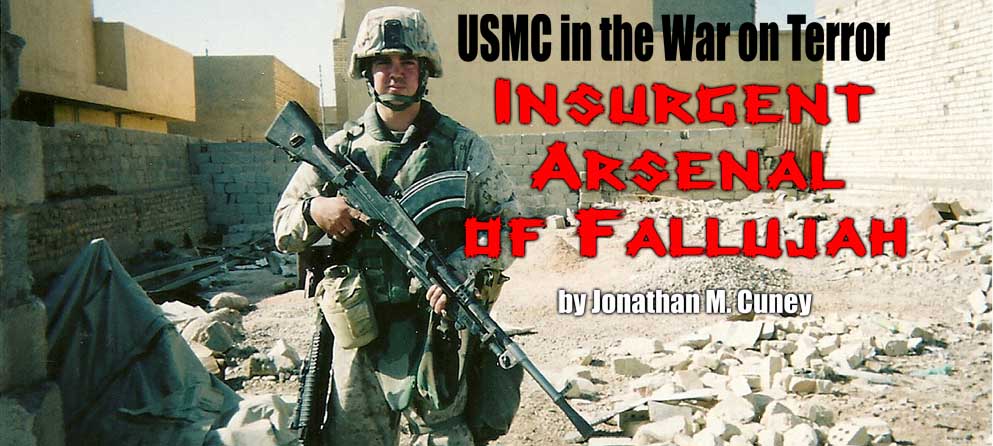
The author taking a quick pause during a lull in the fighting to have a photo snapped with the Bren gun he found and was about to dispose of under a passing tank.

Prologue

In November 2004, the United States Marine Corps rewrote the manuals on urbanized warfare as they battled the insurgency in Fallujah. The Battle of Fallujah was known as Operation Phantom Fury/Al-Fajr (the dawn) and took place from November 2004-December 2005. It would cost 195 American lives and take the lives of thousands of enemy insurgents. The Battle of Fallujah would go on to be described as the bloodiest urban battle since Hue City, Vietnam in 1968.
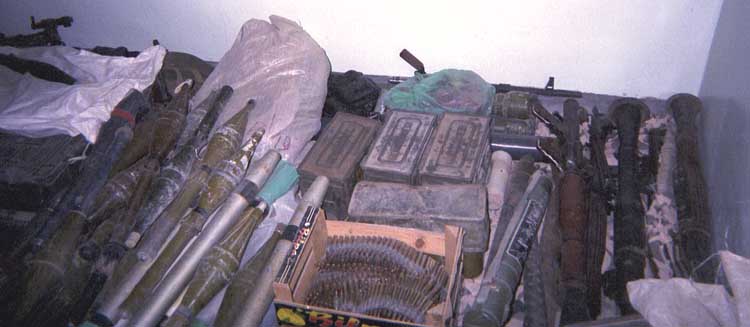
This specific cache held large quantities of PETN and Semtex explosives, Soviet MI-24 (Hind) helicopter missiles, mortar bombs, PG-7 rounds, grenades, small arms ammunition and several SA-7 anti-air missiles.

The insurgency that occupied Fallujah prior to the 2004 invasion was comprised of two types of fighters. One type was well trained foreign fighters in Iraqi to wage Jihad on America and the second was die-hard Iraqi insurgents who viewed the Americans as invaders and wanted them out of Iraq. These forces were vastly different; however they shared several things in common. They were both willing to fight to the death and they were both extremely well armed. Although weapons are common on any battlefield, after carefully analyzing the firearms utilized by the insurgency in Fallujah one would have to be curious as to the origins of some.
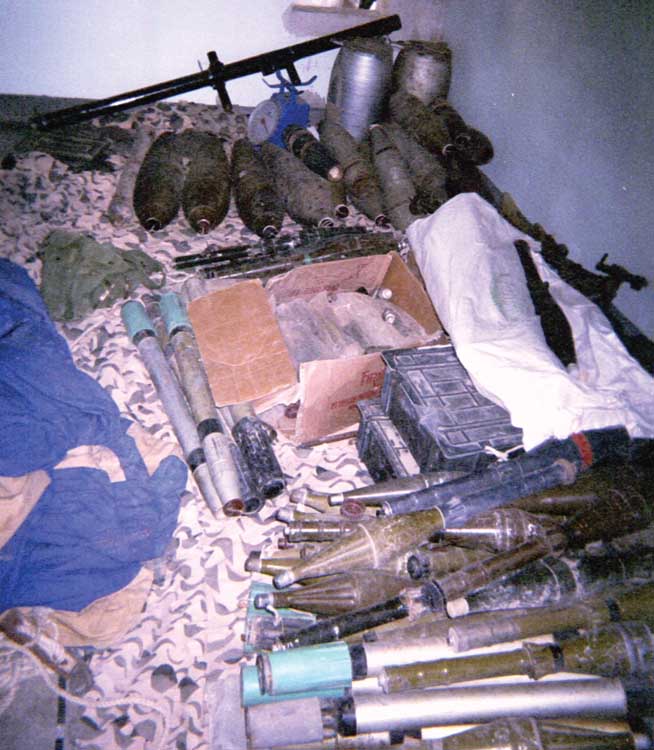
Caches like this one were a common find during the battle of Fallujah. It contained 155mm artillery shells utilized to construct Improvised Explosive Devices (IEDs), homemade rocket launchers, small arms ammunition, 57mm rockets and PG-7 grenades.

In April of 2004, the U.S. Military acting in response to the killing and mutilation of several military contractors decided to launch an invasion on the city of Fallujah and root out the insurgency there. The U.S. Military launched Operation Vigilant Resolve but ran into stiff resistance almost immediately. The U.S. Marines initial invasion into Fallujah caused many casualties on both sides but also began inflicting collateral damage to the civilian populace and started crumbling Fallujah’s infrastructure. Due to concern over collateral damage, the U.S. troops broke engagement and exited the city. Upon exit, the U.S. forces cordoned the city, laying it under siege. Security check points were set up and manned around the city’s perimeter enabling patrols of the city’s outskirts. These forces were also able to control traffic flow into and out of the city and gave the U.S. Military the opportunity to search vehicles and personnel. The use of fortified patrol bases around the city worked well in restricting the movements of insurgents outside the city limits; however inside the city insurgents roamed freely as no U.S. presence was maintained inside Fallujah.

Inside Fallujah the insurgency was free to launch mortar and rocket attacks at the troops stationed at the positions around the city. The insurgents also regularly conducted sniper attacks, sprung ambushes on supply convoys and harassed the day to day operations around the city with impunity. This deteriorating security situation lasted for nearly 7 months until November of 2004 when the U.S. Military decided to re-attack the insurgent stronghold. Since the April 2004 withdrawal of U.S. Forces from within the cities limits, Fallujah was left completely open to the insurgents and maintained no U.S. presence within the city. This gave the opposition time to prepare, draw battle plans, establish caches, tunnel, plant IEDs within the infrastructure (cemented into the sidewalks) and allow their supply chain to flood the market with explosives, weapons and ammo. The U.S. Marines assault on Fallujah was swift, brutal and deadly. U.S. Forces took hundreds of casualties, killed thousands of insurgents, destroyed much of Fallujah’s infrastructure and encountered weapons very seldom seen on today’s battlefields. Videos shot by insurgents prior to the U.S. invasion of Fallujah depicts insurgents manning checkpoints with PKMs, RPGs, SA-7 and SA-14 anti-aircraft missiles and other types of ComBloc battlefield weaponry. The true quantities and vast types of firearms available stifled even the most senior officials when the battle subsided and reports were taken.

Weapons Supply Chain

The insurgency in Iraq drew weapons and equipment from many sources. After Sadaam Hussein’s government was toppled his arsenals were looted by the populace and weaponry began to flood the streets and markets. Certain areas of Fallujah became impromptu arms bazaars selling these weapons off to insurgents and populace alike.
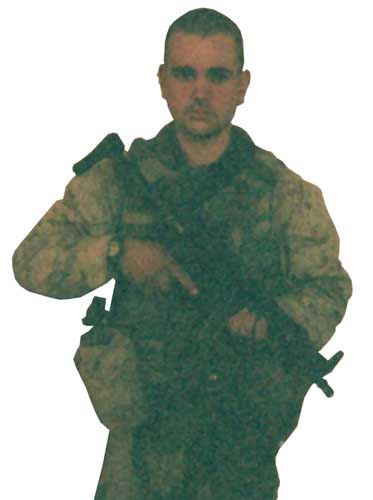
This is a grainy photo of the author with an Iranian MP5 SMG. This was the “jackpot” piece for the U.S. Marines to find on the battlefield as it was immediately put into action.

Many of the foreign fighters entering Iraq by car or train from Syria to fight against the U.S. passed through Fallujah. They frequently stopped to drop off or pick up weaponry in the process. Another source was due to the Iran-Iraq war and the first U.S.-Iraq war. Many weapons remained in the hands of the civilian populace and were easily sold for high prices to the insurgency. These were the insurgent’s easiest route to securing arms to fight the coalition forces.

Some weapons were smuggled in from Syria and other Arab nations and also usually found their way to areas such as Ramadi or Fallujah as they were along the route to Baghdad and were hotbeds of insurgent activity. Black market arms dealers were prevalent in Iraq. The coalition forces on occasion were tipped off to be on the alert for vehicles traveling that were occupied by alleged arms dealers traversing the countryside brokering illicit deals with Al-Qaeda in Iraq and the Insurgency. Another unfortunate source of insurgent arms was via the Iraqi Military and Police. Many times after the U.S. delivered new shipments of arms to local police or military units a group of insurgents would raid the armory and take them. Sometimes the insurgents would drop in for chai and get help from the local authorities loading up the new guns as they were often in cahoots.

Although the Kalashnikov was the most prevalent firearm on the battlefield, many other firearms were encountered. Like most Islamic Insurgencies the main armaments utilized were the AK-47/AKM, FN FAL rifles, G-3 rifles, SVD sniper rifles, RPK light machine guns, PKM General Purpose MGs, RPG-7 rocket assisted grenade launchers and SPG-9 recoilless rifles as well as the DSHK heavy MG and ZU-23-2 anti-aircraft gun. Most of these weapons were of various origins that where common for their type.

Most of the hardware was derived from Russia, Bulgaria, Yugoslavia, China, East Germany, Egypt, Romania and Iraq’s Tabuk Armory. The aforementioned firepower was integrated into Sadaam’s military ranks via legitimate sale and eventually ended up on the streets due to the toppling of his government and subsequent looting. Often times these weapons can be easily distinguished by arsenal markings, safety selector markings and by accessories such as the plastic pistol grip and grenade launching sites commonly seen on Iraqi and Yugo AKs.
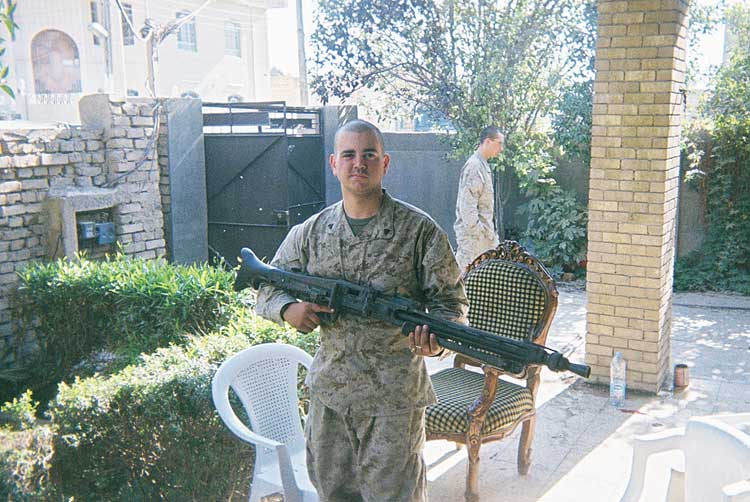
The author posing with an MG42 (or MG3 variant) after working to dismantle a massive cache and inventory the items it contained. Due to the massive volume of the cache and likelihood of booby traps the entire home was rigged with C-4 and destroyed.

Rarely encountered yet relished when they were confiscated were unlicensed Iranian copies of the MP5 submachine gun. These firearms were found on several dead insurgents not possessing identification so it remains unclear if they were operatives from Iran or simply utilizing weaponry left over from the Iran-Iraq war. As most firepower recovered from the enemy was placed in massive piles and destroyed, troops often times adopted them for personal use utilizing issued 9x19mm cartridges from their Berretta M9 (Model 92) to fill the magazines. The compact size of the retractable stock version MP5 encountered enabled troops to conduct close quarters battle with a combat proven weapons system without telegraphing the longer barrel of the M16A4 rifles they were issued past doorways and also gave them a fully automatic capability as opposed to the standard 3-round burst. Also recovered were several unlicensed Iranian copies of the G3 rifle. The markings were unique and very rarely encountered but were most certainly those of the Islamic Republic of Iran.
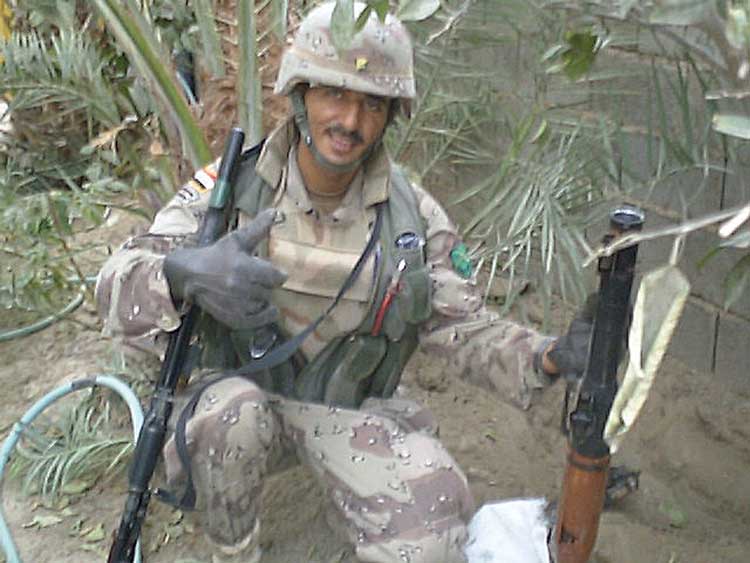
An Iraqi army soldier digging up a cache hidden in a garden containing AKs, RPGs and ammunition.

These rifles were often times recovered from dead Chechen foreign fighters who were also equipped with modern tactical vest, body armor and optics. They were often times hopped up on pain killers and had pre-applied tourniquets on their limbs.

Chechens could be easily distinguished by their lighter skin tone, lighter hair color, advanced equipment, Chechen literature and terrorist manuals they carried and by the amount of casualties they inflicted on U.S. forces in the ensuing battle to kill them. Overly accurate Chechen snipers utilizing Iranian G3 clones over the Draganov sniper system seemed to be commonplace on the battlefield of Fallujah.

Old Workhorses still in Action,
Some of the rare and exotic weaponry that was located throughout the battlefield of Fallujah had a more unique history. Firearms such as the British Sterling SMG, Soviet PPSh-41 SMG or the British Bren gun were often encountered in caches as opposed to being utilized in active combat by insurgents. In one specific instance, however, a general purpose machine gun was utilized to pin down U.S. troops advancing towards a row of shops. After Marines overran the position they were surprised that the enemy’s machine gun looked like a “mini Browning M2HB.” The Marines were even more surprised when they could read the markings on the firearms and determine it was of U.S. origin and being used against them. It was a U.S. Browning M1919A4 .30 caliber machine gun. It was clearly very old, possibly from Korea or WWII era. Insurgents are known to utilize any firearms they can find – however, where did such antique firearms come from? After some careful digging it was established that several of the WWII weapons we encountered seemed to have derived from the post-invasion looting of Baghdad’s museums. Shortly after their looting they were enlisted into the insurgent’s arsenal via a high ticket price on the Iraqi black market.

Pistols were also readily available on the battlefield. Browning Hi-Power, CZ 75, Makarov, Tokarov, Glock 19, Walther P99, Colt 1911, Webley and Zastava revolvers and local Iraqi Tariq pistols were everywhere. Tariq pistols were Iraqi copies of the Beretta 52/Helwan pistols scrawled with Arabic writing and with a gold inlayed coin in the pistol grips. Pistols were usually found in caches as were homemade suppressors, however on occasion a pistol would be found on an insurgent, usually signifying a position of authority. CZ Skorpians were also a commonly encountered SMG but due to the small 7.65 caliber round it was never adapted for use by troops as was the MP5s, Sterlings, and PPSh-41s.

Fallujah was a battle fought much differently from other battles in the war. U.S. troops didn’t drive headlong into city’s centers and raise the flag as was done in Baghdad. Fallujah was fought room by room, house by house, block by block throughout the entire city. Enemies were encountered sometimes one or two at a time and others in groups of 25 or 30 and always heavily armed. Troops were unsure if enemies were in the next room, the next house or on the next block. This situation made the battle a very tense one. Until the battle ended and the city was searched, the US forces had no idea the arsenal that was hidden behind closed doors awaiting them.

Aftermath

After the city was seized by U.S. forces the daunting process of back clearing homes, conducting counter insurgency operations and attempting to retrieve and render inoperable all enemy hardware became the Marine mission.

Piles of firearms, mortars, rocket launchers, ammunition, grenades, explosives, and equipment lay around the base for months. These firearms were eventually lined up and crushed by tanks or burned. Surprisingly, even the crushing strength of an M1 Abrahams tank on weapons on concrete wouldn’t always render Kalashnikovs inoperable. The explosives and ammunition were placed in a large pit and controlled detonated by U.S. Explosive Ordinance Disposal units. Certain trophy pieces such as a Browning 12 gage with gold inlay, gold and chrome Kalashnikovs and custom Tariq pistols were spared for use in museums back in the states or for units to utilize as trophies for their barracks back home.

In the end, the Marines and Corpsman who took part in the battle saw the world’s most raw firepower being utilized at its finest and still managed to reckon with their enemies. All combatants learned firsthand more about firepower than they could have ever imagined: from the capabilities, usage and nomenclature of the enemies weapons to their strengths and weaknesses. The Battle of Fallujah was not only a tremendous battle and tactical feat for those involved it also became a university on foreign small arms.
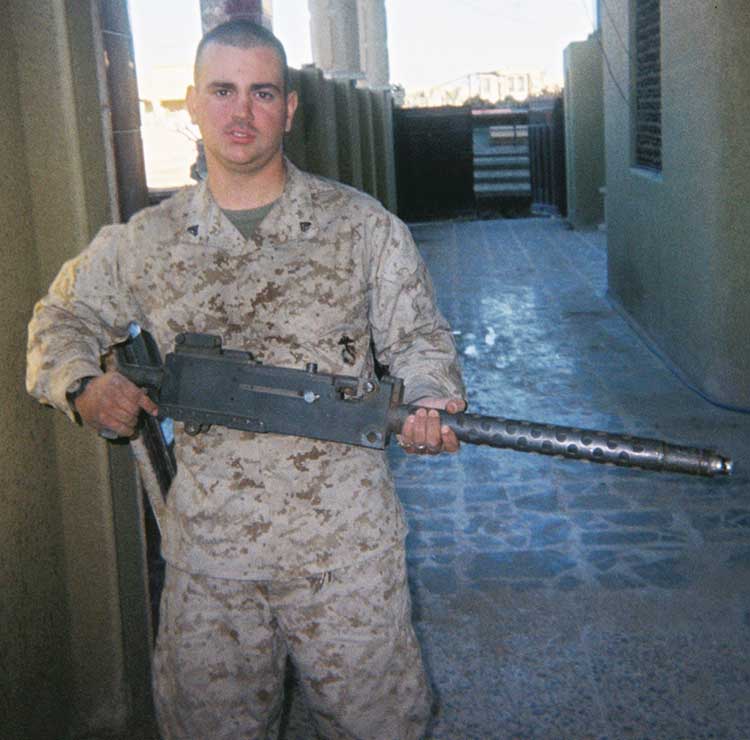
Photo of the author at the battles end with a seized Browning M1919A6.

(About the author: Jonathan M. Cuney is a former U.S. Marine Sergeant and combat wounded veteran of the Battle of Fallujah. He is the recipient of the Purple Heart, Combat Action Ribbon, Conspicuous Service Cross, Conspicuous Service Star and nearly a half dozen other medals and accommodations. He served as the Threat Weapons Non Commissioned Officer (NCO) for Kilo Company, 3rd Battalion, 5th Marines of the 1st Marine Division. Sgt. Cuney many times utilized his expertise to assist in identifying enemy weapon systems both captured and in use by the enemy during combat. This gave the troops he fought alongside the knowledge they needed to recognize the enemy’s capabilities (range, rounds per min, etc.). It also helped to render the enemies firearms inoperable as they continued to push on in their advance during battle.)

This article first appeared in Small Arms Review V15N1 (October 2011)

Author

  • SAR Staff
    SAR Staff

    View all posts
Tags: 2011FallujahJonathan M. CuneyNCONon Commissioned OfficerV15N1
Previous Post

COLT ARMALITE AR-15 RIFLE #000106 THE COCONUT RIFLE

Next Post

PROJECT MANAGER SOLDIER WEAPONS: CUTTING EDGE WEAPONRY

Next Post
PROJECT MANAGER SOLDIER WEAPONS: CUTTING EDGE WEAPONRY

PROJECT MANAGER SOLDIER WEAPONS: CUTTING EDGE WEAPONRY

TRENDING STORIES

  • The Alofs Reloading Magazine for Shotguns

    The Alofs Reloading Magazine for Shotguns

    0 shares
    Share 0 Tweet 0
  • The New Light and Handy Ruger American Generation II Ranch Rifle

    0 shares
    Share 0 Tweet 0
  • The Complete Guide To Colt M-16 Models: Part I

    0 shares
    Share 0 Tweet 0
  • True to Form: The Tisas 1911A1 ASF

    0 shares
    Share 0 Tweet 0
  • VALKYRIE ARMAMENT BELT-FED CONVERSION

    0 shares
    Share 0 Tweet 0

RECENT POSTS

SIG Sauer’s Full-Size Compact P365 “Fuse”

SIG Sauer’s Full-Size Compact P365 “Fuse”

June 27, 2024
The Importance of Offhand Shooting

The Importance of Offhand Shooting

June 25, 2024
BOOK REVIEW – The Collector’s Guide to the SKS

BOOK REVIEW – The Collector’s Guide to the SKS

June 20, 2024
True to Form: The Tisas 1911A1 ASF

True to Form: The Tisas 1911A1 ASF

June 18, 2024
Setting the Record Straight on the Fedorov Avtomat

Setting the Record Straight on the Fedorov Avtomat

June 6, 2024

QUICK LINKS

  • About Chipotle Publishing
  • About Small Arms Review
  • Advertise with Us
  • Write for Us

CONTACT DETAILS

  • Phone: +1 (702) 565-0746
  • E-mail: office@smallarmsreview.com
  • Web: www.chipotlepublishing.com
  • Chipotle Publishing, LLC 631 N. Stephanie St., No. 282, Henderson, NV 89014
Small Arms Review

FOLLOW US

  • Privacy Policy
  • Disclaimer

© 2022 Chipotle Publishing | All Rights Reserved

Welcome Back!

Login to your account below

Forgotten Password?

Retrieve your password

Please enter your username or email address to reset your password.

Log In

Add New Playlist

No Result
View All Result
  • Home
  • Articles
    • Guns & Parts
    • Suppressors
    • Optics & Thermals
    • Ammunition
    • Gear
    • News & Opinion
    • Columns
    • Museums & Factory Tours
    • ID Guides
    • Interviews
    • Event Coverage
    • Articles by Issue
      • Volume 1
      • Volume 2
      • Volume 3
      • Volume 4
      • Volume 5
      • Volume 6
      • Volume 7
      • Volume 8
      • Volume 9
      • Volume 10
      • Volume 11
      • Volume 12
      • Volume 13
      • Volume 14
      • Volume 15
      • Volume 16
      • Volume 17
      • Volume 18
      • Volume 19
      • Volume 20
      • Volume 21
      • Volume 22
      • Volume 23
      • Volume 24
  • The Archive
    • Search The Archive
  • Store
    • Books
    • Back Issues
    • Merchandise
  • Events
  • About
    • About Small Arms Review
    • About Chipotle Publishing
    • Contact Us
    • Other Publications
      • Small Arms Defense Journal

© 2022 Chipotle Publishing | All Rights Reserved

This website uses cookies. By continuing to use this website you are giving consent to cookies being used. Visit our Privacy and Cookie Policy.

Redirecting to External Website

You are leaving the Small Arms Review website and will be redirected to an external link in a 5 Seconds.
VISIT NOW!