



Small Arms Review
  • Home
  • Articles
    • Guns & Parts
    • Suppressors
    • Optics & Thermals
    • Ammunition
    • Gear
    • News & Opinion
    • Columns
    • Museums & Factory Tours
    • ID Guides
    • Interviews
    • Event Coverage
    • Articles by Issue
      • Volume 1
        • V1N1 (Oct 1997)
        • V1N2 (Nov 1997)
        • V1N3 (Dec 1997)
        • V1N4 (Jan 1998)
        • V1N5 (Feb 1998)
        • V1N6 (Mar 1998)
        • V1N7 (Apr 1998)
        • V1N8 (May 1998)
        • V1N9 (Jun 1998)
        • V1N10 (Jul 1998)
        • V1N11 (Aug 1998)
        • V1N12 (Sep 1998)
      • Volume 2
        • V2N1 (Oct 1998)
        • V2N2 (Nov 1998)
        • V2N3 (Dec 1998)
        • V2N4 (Jan 1999)
        • V2N5 (Feb 1999)
        • V2N6 (Mar 1999)
        • V2N7 (Apr 1999)
        • V2N8 (May 1999)
        • V2N9 (Jun 1999)
        • V2N10 (Jul 1999)
        • V2N11 (Aug 1999)
        • V2N12 (Sep 1999)
      • Volume 3
        • V3N1 (Oct 1999)
        • V3N2 (Nov 1999)
        • V3N3 (Dec 1999)
        • V3N4 (Jan 2000)
        • V3N5 (Feb 2000)
        • V3N6 (Mar 2000)
        • V3N7 (Apr 2000)
        • V3N8 (May 2000)
        • V3N9 (Jun 2000)
        • V3N10 (Jul 2000)
        • V3N11 (Aug 2000)
        • V3N12 (Sep 2000)
      • Volume 4
        • V4N1 (Oct 2000)
        • V4N2 (Nov 2000)
        • V4N3 (Dec 2000)
        • V4N4 (Jan 2001)
        • V4N5 (Feb 2001)
        • V4N6 (Mar 2001)
        • V4N7 (Apr 2001)
        • V4N8 (May 2001)
        • V4N9 (Jun 2001)
        • V4N10 (Jul 2001)
        • V4N11 (Aug 2001)
        • V4N12 (Sep 2001)
      • Volume 5
        • V5N1 (Oct 2001)
        • V5N2 (Nov 2001)
        • V5N3 (Dec 2001)
        • V5N4 (Jan 2002)
        • V5N5 (Feb 2002)
        • V5N6 (Mar 2002)
        • V5N7 (Apr 2002)
        • V5N8 (May 2002)
        • V5N9 (Jun 2002)
        • V5N10 (Jul 2002)
        • V5N11 (Aug 2002)
        • V5N12 (Sep 2002)
      • Volume 6
        • V6N1 (Oct 2002)
        • V6N2 (Nov 2002)
        • V6N3 (Dec 2002)
        • V6N4 (Jan 2003)
        • V6N5 (Feb 2003)
        • V6N6 (Mar 2003)
        • V6N7 (Apr 2003)
        • V6N8 (May 2003)
        • V6N9 (Jun 2003)
        • V6N10 (Jul 2003)
        • V6N11 (Aug 2003)
        • V6N12 (Sep 2003)
      • Volume 7
        • V7N1 (Oct 2003)
        • V7N2 (Nov 2003)
        • V7N3 (Dec 2003)
        • V7N4 (Jan 2004)
        • V7N5 (Feb 2004)
        • V7N6 (Mar 2004)
        • V7N7 (Apr 2004)
        • V7N8 (May 2004)
        • V7N9 (Jun 2004)
        • V7N10 (Jul 2004)
        • V7N11 (Aug 2004)
        • V7N12 (Sep 2004)
      • Volume 8
        • V8N1 (Oct 2004)
        • V8N2 (Nov 2004)
        • V8N3 (Dec 2004)
        • V8N4 (Jan 2005)
        • V8N5 (Feb 2005)
        • V8N6 (Mar 2005)
        • V8N7 (Apr 2005)
        • V8N8 (May 2005)
        • V8N9 (Jun 2005)
        • V8N10 (Jul 2005)
        • V8N11 (Aug 2005)
        • V8N12 (Sep 2005)
      • Volume 9
        • V9N1 (Oct 2005)
        • V9N2 (Nov 2005)
        • V9N3 (Dec 2005)
        • V9N4 (Jan 2006)
        • V9N5 (Feb 2006)
        • V9N6 (Mar 2006)
        • V9N7 (Apr 2006)
        • V9N8 (May 2006)
        • V9N9 (Jun 2006)
        • V9N10 (Jul 2006)
        • V9N11 (Aug 2006)
        • V9N12 (Sep 2006)
      • Volume 10
        • V10N1 (Oct 2006)
        • V10N2 (Nov 2006)
        • V10N3 (Dec 2006)
        • V10N4 (Jan 2007)
        • V10N5 (Feb 2007)
        • V10N6 (Mar 2007)
        • V10N7 (Apr 2007)
        • V10N8 (May 2007)
        • V10N9 (Jun 2007)
        • V10N10 (Jul 2007)
        • V10N11 (Aug 2007)
        • V10N12 (Sep 2007)
      • Volume 11
        • V11N1 (Oct 2007)
        • V11N2 (Nov 2007)
        • V11N3 (Dec 2007)
        • V11N4 (Jan 2008)
        • V11N5 (Feb 2008)
        • V11N6 (Mar 2008)
        • V11N7 (Apr 2008)
        • V11N8 (May 2008)
        • V11N9 (Jun 2008)
        • V11N10 (Jul 2008)
        • V11N11 (Aug 2008)
        • V11N12 (Sep 2008)
      • Volume 12
        • V12N1 (Oct 2008)
        • V12N2 (Nov 2008)
        • V12N3 (Dec 2008)
        • V12N4 (Jan 2009)
        • V12N5 (Feb 2009)
        • V12N6 (Mar 2009)
        • V12N7 (Apr 2009)
        • V12N8 (May 2009)
        • V12N9 (Jun 2009)
        • V12N10 (Jul 2009)
        • V12N11 (Aug 2009)
        • V12N12 (Sep 2009)
      • Volume 13
        • V13N1 (Oct 2009)
        • V13N2 (Nov 2009)
        • V13N3 (Dec 2009)
        • V13N4 (Jan 2010)
        • V13N5 (Feb 2010)
        • V13N6 (Mar 2010)
        • V13N7 (Apr 2010)
        • V13N8 (May 2010)
        • V13N9 (Jun 2010)
        • V13N10 (Jul 2010)
        • V13N11 (Aug 2010)
        • V13N12 (Sep 2010)
      • Volume 14
        • V14N1 (Oct 2010)
        • V14N2 (Nov 2010)
        • V14N3 (Dec 2010)
          • Ammunition
        • V14N4 (Jan 2011)
        • V14N5 (Feb 2011)
        • V14N6 (Mar 2011)
        • V14N7 (Apr 2011)
        • V14N8 (May 2011)
        • V14N9 (Jun 2011)
        • V14N10 (Jul 2011)
        • V14N11 (Aug 2011)
        • V14N12 (Sep 2011)
      • Volume 15
        • V15N1 (Oct 2011)
        • V15N2 (Nov 2011)
        • V15N4 (Jan 2012)
        • V15N5 (Feb 2012)
      • Volume 16
        • V16N1 (1st Quarter 2012)
        • V16N2 (2nd Quarter 2012)
        • V16N3 (3rd Quarter 2012)
        • V16N4 (4th Quarter 2012)
      • Volume 17
        • V17N1 (1st Quarter 2013)
        • V17N2 (2nd Quarter 2013)
        • V17N3 (3rd Quarter 2013)
        • V17N4 (4th Quarter 2013)
      • Volume 18
        • V18N1 (Jan Feb 2014)
        • V18N2 (Mar Apr 2014)
        • V18N3 (May Jun 2014)
        • V18N4 (Jul Aug 2014)
        • V18N5 (Sep Oct 2014)
        • V18N6 (Nov Dec 2014)
      • Volume 19
        • V19N1 (Jan 2015)
        • V19N2 (Feb Mar 2015)
        • V19N3 (Apr 2015)
        • V19N4 (May 2015)
        • V19N5 (Jun 2015)
        • V19N6 (Jul 2015)
        • V19N7 (Aug Sep 2015)
        • V19N8 (Oct 2015)
        • V19N9 (Nov 2015)
        • V19N10 (Dec 2015)
      • Volume 20
        • V20N1 (Jan 2016)
        • V20N2 (Feb Mar 2016)
        • V20N3 (Apr 2016)
        • V20N4 (May 2016)
        • V20N5 (Jun 2016)
        • V20N6 (Jul 2016)
        • V20N7 (Aug Sep 2016)
        • V20N8 (Oct 2016)
        • V20N9 (Nov 2016)
        • V20N10 (Dec 2016)
      • Volume 21
        • V21N1 (Jan 2017)
        • V21N2 (Feb Mar 2017)
        • V21N3 (Apr 2017)
        • V21N4 (May 2017)
        • V21N5 (Jun 2017)
        • V21N6 (Jul 2017)
        • V21N7 (Aug Sep 2017)
        • V21N8 (Oct 2017)
        • V21N9 (Nov 2017)
        • V21N10 (Dec 2017)
      • Volume 22
        • V22N1 (Jan 2018)
        • V22N2 (Feb 2018)
        • V22N3 (March 2018)
        • V22N4 (Apr 2018)
        • V22N5 (May 2018)
        • V22N6 (Jun Jul 2018)
        • V22N7 (Aug Sep 2018)
        • V22N8 (Oct 2018)
        • V22N9 (Nov 2018)
        • V22N10 (Dec 2018)
      • Volume 23
        • V23N1 (Jan 2019)
        • V23N2 (Feb 2019)
        • V23N3 (Mar 2019)
        • V23N4 (Apr 2019)
        • V23N5 (May 2019)
        • V23N6 (Jun Jul 2019)
        • V23N7 (Aug Sep 2019)
        • V23N8 (Oct 2019)
        • V23N9 (Nov 2019)
        • V23N10 (Dec 2019)
      • Volume 24
        • V24N1 (Jan 2020)
        • V24N2 (Feb 2020)
        • V24N3 (Mar 2020)
        • V24N4 (Apr 2020)
        • V24N5 (May 2020)
        • V24N6 (Jun Jul 2020)
        • V24N7 (Aug Sep 2020)
        • V24N8 (Oct 2020)
        • V24N9 (Nov 2020)
        • V24N10 (Dec 2020)
  • The Archive
    • Search The Archive
  • Store
    • Books
    • Back Issues
    • Merchandise
  • Events
  • About
    • About Small Arms Review
    • About Chipotle Publishing
    • Contact Us
    • Other Publications
      • Small Arms Defense Journal
  • Home
  • Articles
    • Guns & Parts
    • Suppressors
    • Optics & Thermals
    • Ammunition
    • Gear
    • News & Opinion
    • Columns
    • Museums & Factory Tours
    • ID Guides
    • Interviews
    • Event Coverage
    • Articles by Issue
      • Volume 1
        • V1N1 (Oct 1997)
        • V1N2 (Nov 1997)
        • V1N3 (Dec 1997)
        • V1N4 (Jan 1998)
        • V1N5 (Feb 1998)
        • V1N6 (Mar 1998)
        • V1N7 (Apr 1998)
        • V1N8 (May 1998)
        • V1N9 (Jun 1998)
        • V1N10 (Jul 1998)
        • V1N11 (Aug 1998)
        • V1N12 (Sep 1998)
      • Volume 2
        • V2N1 (Oct 1998)
        • V2N2 (Nov 1998)
        • V2N3 (Dec 1998)
        • V2N4 (Jan 1999)
        • V2N5 (Feb 1999)
        • V2N6 (Mar 1999)
        • V2N7 (Apr 1999)
        • V2N8 (May 1999)
        • V2N9 (Jun 1999)
        • V2N10 (Jul 1999)
        • V2N11 (Aug 1999)
        • V2N12 (Sep 1999)
      • Volume 3
        • V3N1 (Oct 1999)
        • V3N2 (Nov 1999)
        • V3N3 (Dec 1999)
        • V3N4 (Jan 2000)
        • V3N5 (Feb 2000)
        • V3N6 (Mar 2000)
        • V3N7 (Apr 2000)
        • V3N8 (May 2000)
        • V3N9 (Jun 2000)
        • V3N10 (Jul 2000)
        • V3N11 (Aug 2000)
        • V3N12 (Sep 2000)
      • Volume 4
        • V4N1 (Oct 2000)
        • V4N2 (Nov 2000)
        • V4N3 (Dec 2000)
        • V4N4 (Jan 2001)
        • V4N5 (Feb 2001)
        • V4N6 (Mar 2001)
        • V4N7 (Apr 2001)
        • V4N8 (May 2001)
        • V4N9 (Jun 2001)
        • V4N10 (Jul 2001)
        • V4N11 (Aug 2001)
        • V4N12 (Sep 2001)
      • Volume 5
        • V5N1 (Oct 2001)
        • V5N2 (Nov 2001)
        • V5N3 (Dec 2001)
        • V5N4 (Jan 2002)
        • V5N5 (Feb 2002)
        • V5N6 (Mar 2002)
        • V5N7 (Apr 2002)
        • V5N8 (May 2002)
        • V5N9 (Jun 2002)
        • V5N10 (Jul 2002)
        • V5N11 (Aug 2002)
        • V5N12 (Sep 2002)
      • Volume 6
        • V6N1 (Oct 2002)
        • V6N2 (Nov 2002)
        • V6N3 (Dec 2002)
        • V6N4 (Jan 2003)
        • V6N5 (Feb 2003)
        • V6N6 (Mar 2003)
        • V6N7 (Apr 2003)
        • V6N8 (May 2003)
        • V6N9 (Jun 2003)
        • V6N10 (Jul 2003)
        • V6N11 (Aug 2003)
        • V6N12 (Sep 2003)
      • Volume 7
        • V7N1 (Oct 2003)
        • V7N2 (Nov 2003)
        • V7N3 (Dec 2003)
        • V7N4 (Jan 2004)
        • V7N5 (Feb 2004)
        • V7N6 (Mar 2004)
        • V7N7 (Apr 2004)
        • V7N8 (May 2004)
        • V7N9 (Jun 2004)
        • V7N10 (Jul 2004)
        • V7N11 (Aug 2004)
        • V7N12 (Sep 2004)
      • Volume 8
        • V8N1 (Oct 2004)
        • V8N2 (Nov 2004)
        • V8N3 (Dec 2004)
        • V8N4 (Jan 2005)
        • V8N5 (Feb 2005)
        • V8N6 (Mar 2005)
        • V8N7 (Apr 2005)
        • V8N8 (May 2005)
        • V8N9 (Jun 2005)
        • V8N10 (Jul 2005)
        • V8N11 (Aug 2005)
        • V8N12 (Sep 2005)
      • Volume 9
        • V9N1 (Oct 2005)
        • V9N2 (Nov 2005)
        • V9N3 (Dec 2005)
        • V9N4 (Jan 2006)
        • V9N5 (Feb 2006)
        • V9N6 (Mar 2006)
        • V9N7 (Apr 2006)
        • V9N8 (May 2006)
        • V9N9 (Jun 2006)
        • V9N10 (Jul 2006)
        • V9N11 (Aug 2006)
        • V9N12 (Sep 2006)
      • Volume 10
        • V10N1 (Oct 2006)
        • V10N2 (Nov 2006)
        • V10N3 (Dec 2006)
        • V10N4 (Jan 2007)
        • V10N5 (Feb 2007)
        • V10N6 (Mar 2007)
        • V10N7 (Apr 2007)
        • V10N8 (May 2007)
        • V10N9 (Jun 2007)
        • V10N10 (Jul 2007)
        • V10N11 (Aug 2007)
        • V10N12 (Sep 2007)
      • Volume 11
        • V11N1 (Oct 2007)
        • V11N2 (Nov 2007)
        • V11N3 (Dec 2007)
        • V11N4 (Jan 2008)
        • V11N5 (Feb 2008)
        • V11N6 (Mar 2008)
        • V11N7 (Apr 2008)
        • V11N8 (May 2008)
        • V11N9 (Jun 2008)
        • V11N10 (Jul 2008)
        • V11N11 (Aug 2008)
        • V11N12 (Sep 2008)
      • Volume 12
        • V12N1 (Oct 2008)
        • V12N2 (Nov 2008)
        • V12N3 (Dec 2008)
        • V12N4 (Jan 2009)
        • V12N5 (Feb 2009)
        • V12N6 (Mar 2009)
        • V12N7 (Apr 2009)
        • V12N8 (May 2009)
        • V12N9 (Jun 2009)
        • V12N10 (Jul 2009)
        • V12N11 (Aug 2009)
        • V12N12 (Sep 2009)
      • Volume 13
        • V13N1 (Oct 2009)
        • V13N2 (Nov 2009)
        • V13N3 (Dec 2009)
        • V13N4 (Jan 2010)
        • V13N5 (Feb 2010)
        • V13N6 (Mar 2010)
        • V13N7 (Apr 2010)
        • V13N8 (May 2010)
        • V13N9 (Jun 2010)
        • V13N10 (Jul 2010)
        • V13N11 (Aug 2010)
        • V13N12 (Sep 2010)
      • Volume 14
        • V14N1 (Oct 2010)
        • V14N2 (Nov 2010)
        • V14N3 (Dec 2010)
          • Ammunition
        • V14N4 (Jan 2011)
        • V14N5 (Feb 2011)
        • V14N6 (Mar 2011)
        • V14N7 (Apr 2011)
        • V14N8 (May 2011)
        • V14N9 (Jun 2011)
        • V14N10 (Jul 2011)
        • V14N11 (Aug 2011)
        • V14N12 (Sep 2011)
      • Volume 15
        • V15N1 (Oct 2011)
        • V15N2 (Nov 2011)
        • V15N4 (Jan 2012)
        • V15N5 (Feb 2012)
      • Volume 16
        • V16N1 (1st Quarter 2012)
        • V16N2 (2nd Quarter 2012)
        • V16N3 (3rd Quarter 2012)
        • V16N4 (4th Quarter 2012)
      • Volume 17
        • V17N1 (1st Quarter 2013)
        • V17N2 (2nd Quarter 2013)
        • V17N3 (3rd Quarter 2013)
        • V17N4 (4th Quarter 2013)
      • Volume 18
        • V18N1 (Jan Feb 2014)
        • V18N2 (Mar Apr 2014)
        • V18N3 (May Jun 2014)
        • V18N4 (Jul Aug 2014)
        • V18N5 (Sep Oct 2014)
        • V18N6 (Nov Dec 2014)
      • Volume 19
        • V19N1 (Jan 2015)
        • V19N2 (Feb Mar 2015)
        • V19N3 (Apr 2015)
        • V19N4 (May 2015)
        • V19N5 (Jun 2015)
        • V19N6 (Jul 2015)
        • V19N7 (Aug Sep 2015)
        • V19N8 (Oct 2015)
        • V19N9 (Nov 2015)
        • V19N10 (Dec 2015)
      • Volume 20
        • V20N1 (Jan 2016)
        • V20N2 (Feb Mar 2016)
        • V20N3 (Apr 2016)
        • V20N4 (May 2016)
        • V20N5 (Jun 2016)
        • V20N6 (Jul 2016)
        • V20N7 (Aug Sep 2016)
        • V20N8 (Oct 2016)
        • V20N9 (Nov 2016)
        • V20N10 (Dec 2016)
      • Volume 21
        • V21N1 (Jan 2017)
        • V21N2 (Feb Mar 2017)
        • V21N3 (Apr 2017)
        • V21N4 (May 2017)
        • V21N5 (Jun 2017)
        • V21N6 (Jul 2017)
        • V21N7 (Aug Sep 2017)
        • V21N8 (Oct 2017)
        • V21N9 (Nov 2017)
        • V21N10 (Dec 2017)
      • Volume 22
        • V22N1 (Jan 2018)
        • V22N2 (Feb 2018)
        • V22N3 (March 2018)
        • V22N4 (Apr 2018)
        • V22N5 (May 2018)
        • V22N6 (Jun Jul 2018)
        • V22N7 (Aug Sep 2018)
        • V22N8 (Oct 2018)
        • V22N9 (Nov 2018)
        • V22N10 (Dec 2018)
      • Volume 23
        • V23N1 (Jan 2019)
        • V23N2 (Feb 2019)
        • V23N3 (Mar 2019)
        • V23N4 (Apr 2019)
        • V23N5 (May 2019)
        • V23N6 (Jun Jul 2019)
        • V23N7 (Aug Sep 2019)
        • V23N8 (Oct 2019)
        • V23N9 (Nov 2019)
        • V23N10 (Dec 2019)
      • Volume 24
        • V24N1 (Jan 2020)
        • V24N2 (Feb 2020)
        • V24N3 (Mar 2020)
        • V24N4 (Apr 2020)
        • V24N5 (May 2020)
        • V24N6 (Jun Jul 2020)
        • V24N7 (Aug Sep 2020)
        • V24N8 (Oct 2020)
        • V24N9 (Nov 2020)
        • V24N10 (Dec 2020)
  • The Archive
    • Search The Archive
  • Store
    • Books
    • Back Issues
    • Merchandise
  • Events
  • About
    • About Small Arms Review
    • About Chipotle Publishing
    • Contact Us
    • Other Publications
      • Small Arms Defense Journal
No Result
View All Result
Small Arms Review
No Result
View All Result
Home Articles

Self Loading Rifle L1A1: The European “Black Rifle”

by SAR Staff
August 1, 2014
in Articles, Articles by Issue, Guns & Parts, Search by Issue, V18N4 (Jul Aug 2014), Volume 18
Self Loading Rifle L1A1: The European “Black Rifle”

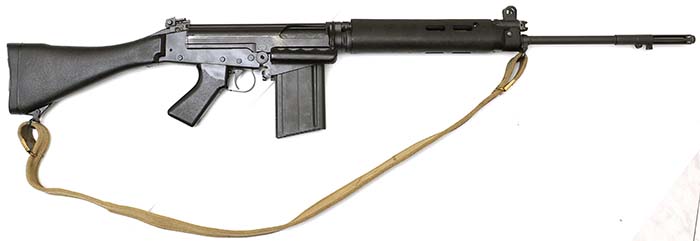
Right hand side of the L1A1.

Share on FacebookShare on Twitter

By Anthony Wicks and Gabriele Tansella

The “Self Loading Rifle L1A1” is the British adaption of the Belgian FN FAL. It was a compromise for project reasons as well as following British Army doctrine of not wanting a fully automatic rifle with such a heavy calibre. It has been one of the best and longest serving rifles, which is a testament to its quality (robustness and accuracy) and ease of handling.

The Self Loading Rifle L1A1, more commonly known simply as the SLR, was a long rifle and is technically a battlefield rifle as opposed to an assault rifle. Chambered for the NATO 7.62x51mm cartridge, it was relatively long compared to the abandoned British bullpup EM-1 and EM2. This rifle was designed mainly to be able to accurately hit center of mass of human size targets out to 600 yards and being only semiautomatic meant that the onus was on the soldier to fire aimed shots rather than “spray and pray.” Therefore, the SLR’s magazine contained 20 double stacked rounds in order for the disciplined troops not to have to carry hundreds of relatively heavy rounds and hence rapid fire was still defined as twenty aimed shots within a minute for suppressive fire.

Describing the L1A1 is akin to describing the definitive version of the FN FAL (Fabrique Nationale – Fusil Automatique Legere [light automatic rifle]). It is clearly based on the design of Saive and Vervier; however, there are a few changes that distinguish the L1A1 from other models, mainly the non-Commonwealth derivatives of the FN FAL. The design was adjusted to be manufactured in imperial measurement as well as having disposed of the ability to fire on full automatic. It maintained the same advanced (for its day) ergonomic stock and positioning of the safety/firing mode lever on the left side of the trigger frame, the same gas operated piston system and double stacked magazines. There are minor differences, measured in decimal points due to the blue prints being either done using the imperial system or the metric one. There are a few more easily visible alterations: the collapsible cocking handle on the L1A1 that also boasted the zigzag indentation on the breech body assembly to reduce the effects of dirt and small items from interfering with the firing of the weapon, the fire selector lever was enlarged and had just two positions – safety and semiautomatic, furthermore the automatic hold open function after the last round had been fired was removed. The hold open is done by depressing a stud situated just behind the magazine housing. The idea to do away with the full automatic fire capability was for tactical reasons as it was correctly deemed that the “.30 Light Rifle” caliber rounds (soon to become the 7.62mm NATO) when fired on full automatic would result in great expenditure of ammunition with no tactical benefits as the rifle was too light to remain stable with such a hard recoil. The British Army remained for many decades the only NATO army not to have rifles capable of firing on full autoimatic mode. It should also be noted that the concept of aim and fire as opposed to the wasteful and not effective “spray and pray” method was adopted as conservation and judicial use of ammunition also alleviated the logistical problem as the infantry could only be provided with a finite amount of ammunition. This can still be seen in Afghanistan where although the L85A2 (a lot less recoil as it uses the 5.56mm NATO rounds) has full auto capability, it is rare for the rifle to be used in that mode unless massive suppressive fire is required before a tactical retreat due to lack of remaining ammo.
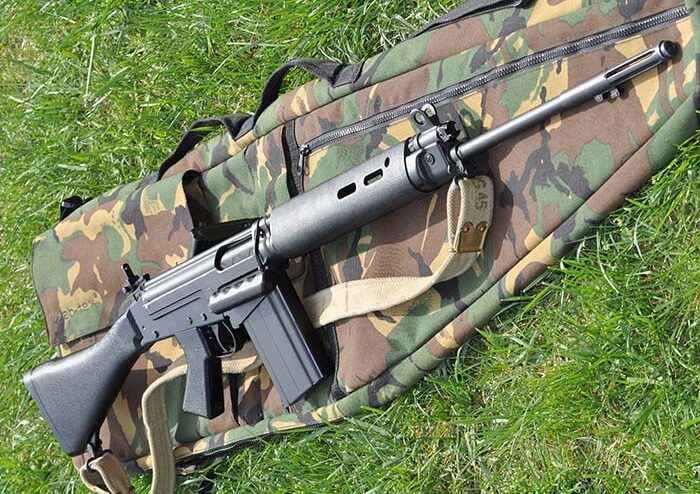
The L1A1 was introduced into the British Armed Forces from the mid 1950s and remained in service until 1989. It proved to be exceptionally robust and effective firing high velocity rounds. With minimum training and given the correct cleaning kit it was useful in all conditions.

Barrel

The barrel of the L1A1 is 21 inches long and has a twist rate of 1 in 11.9 inches. It weighs 12 ounces and the rifling is composed of four grooves. The rifle was chambered for the NATO 7.62mm round. A distinctive long and slender flash suppressor with a catch (just behind the flash suppressor) to lock on the bayonet such as the No.5 Mk1 model, this allows even a casual observer to notice the difference between the SLR and other members and derivatives of the FN FAL family. There are some variations that can be made to launch grenades and attach its simple sighting device. The barrel is rather slender and hence prone to deform after prolonged firing, which as a consequence, as with any rifle, will alter the point of impact. Being an infantry rifle it is not such a massive problem.
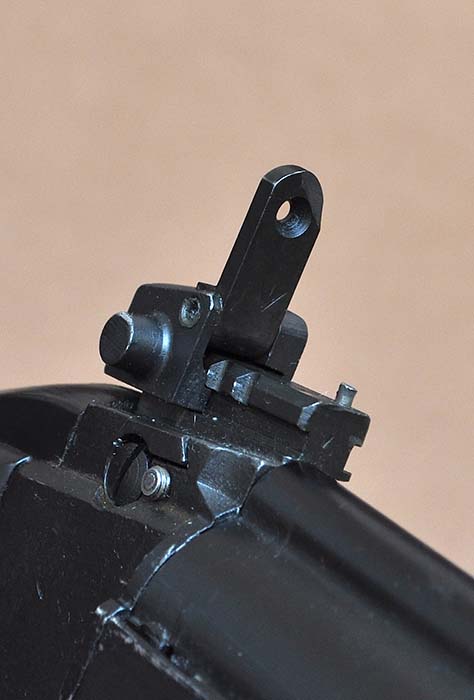
The sliding and collapsible rear sight with a single aperture. The windage can be adjusted by turning the clearly visible screw. The incline has numbers going up to 6, meaning 600 yards, although some even went to 7 (700 yards), therefore, once zeroed, the slide would be pushed past the number representing the estimated distance (in hundreds of yards) to the target.

Body

The body of the rifle can be broken into two main components: the lower receiver and the body barrel group (upper receiver). The butt trigger group is composed of the stock, trigger mechanism, pistol grip, fire selector/safety lever as well as the joint pin holding both bodies together. The body barrel group has the magazine housing, its hold open lever, the entire gas system including the piston and spring, the barrel including the fore and rear iron sights, the cover and the breech body assembly including firing pin. From an ergonomic point of view the L1A1 was at the vanguard at the time of inception, it allowed to the soldier to use their left hand to push the lever from safety to semiautomatic and in most non commonwealth countries onto full automatic mode whilst keeping a firm grip on the rifle via the pistol grip and the butt stock firmly against the shoulder. In order to break open the body barrel group, one needs to cock the rifle and then press the lever that is on the left hand side of the rifle between the end of the body barrel group and the stock. The lever is on the left side along with the cocking handle, the ejection port is on the right hand side. The two bodies remain connected by the joint and retainer pin that is found between the magazine housing and the trigger guard. This can be opened very simply with either a coin or a screwdriver and once unscrewed it is a simple matter to push the retainer pin, essentially a cylinder through and thereby separating the two bodies completely.

In order to execute a field strip, no tools are required. The SLR should be cocked, the magazine extracted and the “upper receiver” opened by pressing the lever as mentioned and pulling the breech block assembly out by gripping the slide rod (rat’s tail), then slide the cover off. The gas plug is next; depress the knob on the side of the gas plug and rotate. Extract slowly, otherwise, the spring loaded piston will fly out. The magazines generally were designed to hold twenty rounds, although the magazine catch on the L1A1 is slightly wider than the “metric” FNs. The L1A1 was able to insert the Bren L4 light machine gun 30-round magazines too, although that was not widespread.
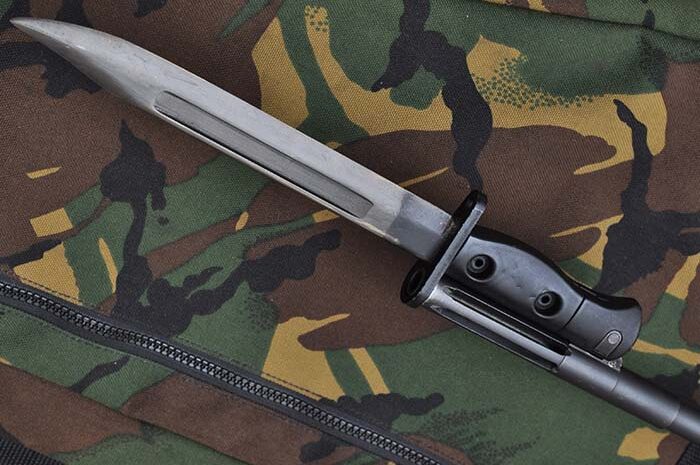
The L1A1 has a very distinctive flash suppressor shown here with its bayonet attached. This weapon is still held in high esteem by those that had it as their weapon in the field.

Stock

The shape of the L1A1’s stock is different to that of the other FALs and as time passed, the stocks and the forehand grip, which were originally made from beech wood, were replaced by synthetic materials, a type of polymer, more specifically a type 6 aliphatic polyamide and stiffened with carbon fiber and colored black giving it the look that most people associate with the rifle. The inside of the stock contains the very powerful return spring (this should never be taken out unless one has the correct equipment as there is no operational reason for taking it). The forehand grip is a classical rounded triangular shape with long slim vents to help cool the barrel. Some FALs had bipods attached to the forehand grip; some famous examples are the Austrian Stg 58 and the Israeli FALO. The heavier barrelled FN FALs became LMGs (Light Machine Guns) such as the Canadian C2 and the Australian L2A2. These Commonwealth rifles were based on the L1A1 but had the capacity to fire full automatic as befits a machine gun. The bipods when not in use would be folded back and hug the underside of the forehand grip and practically reach the firing chamber.
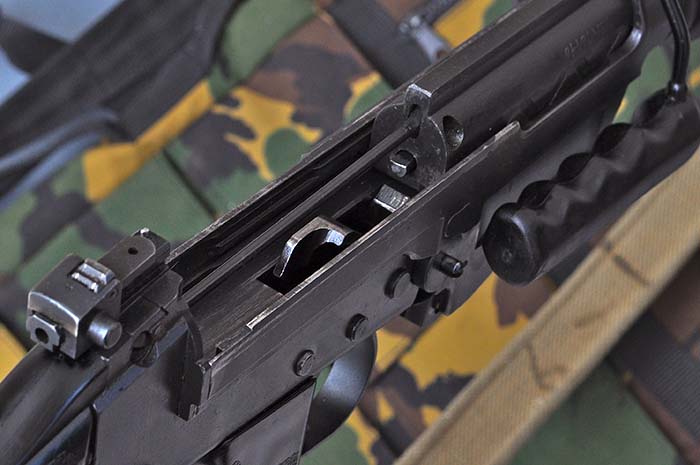
The breech body assembly in the locked position (ready to fire). Notice that the hammer can now strike the protruding firing pin.

Sights

The iron sights on the L1A1 are traditional rear aperture sights and a well-protected foresight. There are two versions of the rear sight: one had a single aperture and the second had two different sized apertures (to facilitate close and long range aiming). All the rear sights when not in use can be folded forward to avoid any potential damage. The rear sight’s slide on an incline going up from the rear in order to fire better aimed shots at different distances by sliding the rear sight up and down the incline. There are also counter screws attached to the rear sight system to regulate windage.

The foresight is directly above the gas plug and is protected by two steel plates that also serve as a reference when taking aim. The foresight can be raised or lowered by loosening a small screw that blocks the foresight in position. Merely loosen the screw and swivel the foresight in the desired direction. Afterwards simply tighten the blocking screw again.

The main method of firing the L1A1 was by using the iron sights. However, in time, some QCB sights were made available to some units – the L2A2 SUIT, also known as the “Trilux,” a delicate and lumpy device filled with inert gas.
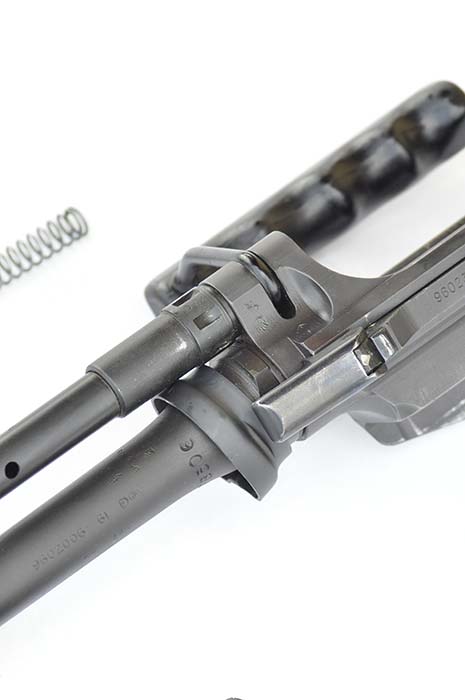
The gas port and regulator as well as view of the curved disc where the hand guard can be locked into position. The bolt handle in the closed position is also clearly visible as are one of the two sets of gas vents to release excess gas to reduce pressure when the rifle is very hot so as to reduce recoil and make the rifle more comfortable to fire accurately.

The SLR in the Field

The L1A1, commonly known as the SLR, is a battle proven weapon and is highly respected by those that used it. It is extremely simple to field strip and has a lot of tolerance, though not as much as an AK47 (its main rival). However, the L1A1 packs more of a punch and when looked after (basic cleaning of the weapon can be done very swiftly) and blockages cleared just as quickly unless an extremely rare mechanical failure in the weapon occurred.

Most of the world recognized the L1A1 during the Falklands conflict and plenty has been written about it there as well as some smaller conflicts around the world.

One of the main criticisms that detractors of the L1A1 go on about is its inability to operate well in rough and or dusty terrain. Therefore, we decided to ask a number of members of the Rhodesian regular army and special forces what they think/thought of the L1A1 (as well as close relatives such as the Portuguese G3 and South African R1) used in the insurrection leading to the handing over of power of the “bread basket of Africa” to the dictator Mugabe in what is now called Zimbabwe. There are quotes, many will identify with them, however, these come from no blogs but actual conversations with those in involved in the conflict and their unambiguous opinion of the L1A1 and their rival the AK47. It should be remembered that like the British Army, the Rhodesians were well trained and disciplined.

For the safety of those who expressed their candid opinions, we have disclosed no names as Mugabe could still represent a threat to them and their families should any be unfortunate enough to live there still. Clearly, as this is about the L1A1, no operations will be described. The request for Rhodesian army/SF combatants to give their personal opinion is more meaningful than the blogs/forums written by those who never used it in combat, especially over many years as in the case of the counter insurgency operations in Rhodesia (Southern Rhodesia to be even more precise).

The soldiers will be shown as letters to protect identity, to save space, only the five that covered all bases mentioned by others have been used (actual quotes):

“A” I preferred the 7.62 FN to the AK as the rounds went through trees that ters (terrorists) were hiding behind while the 7.62 intermediate round that the AK used wouldn’t. The NATO round had a 7 ton hitting force where the communist round had a 5 ton hitting, furthermore, in all the years of fire force (the use of helicopters to transport infantry rapidly to hotspots or take out specific targets) and externals I never had a stoppage or a jam.

“B” AK shorter easier to manipulate did not jam. Close better but long FN more accurate powerful went through trees removing them as effective cover.

“C” There are numerous debates on this subject and most Rhodesians are biased towards the SLR/FN because that was their rifle and not their “gun.” That said, certain “special forces” soldiers might have favored the AK47 due to operating on externals where the AK was good pseudo camouflage, lighter, maneuverable, etc. As “A” and “B” have stated above, the AK had less hitting power but was more robust in terms of maintenance. The AK was also infinitely less accurate than the SLR/FN. The SLR/FN needed constant maintenance, particularly in terms of gas regulation and moving parts but, Rhodesian soldiers were issued with kits for such. I doubt many of the enemy carried 4×2 cloths and gun oil to service their AKs. In my opinion (and I am biased) with correct maintenance the SLR/FN was a far better “killer.”

“D” I was trained and deployed using the R1/SLR and agree with the above comments. I do disagree with the G3 comment though… used this on ops with the square hand guard (that didn’t rattle or burn you after 2 mags) and the nylon stock used on the R1. ..GREAT weapon. Fluted chamber so no stoppages, longer sight radius and the empties were ejected almost back to hell and gone.

“E” Advantages of 7.62x51mm NATO standard ammo and weapon systems FN FAL/R1/SLR/G3 greater accuracy over long range (+/- 600m individual capability) kinetic energy/knock dower power. Shoot through power penetration (walls, dagga & trees etc.). Weight of ammo and selector/safety lever configuration encouraged ammunition conservation and aimed shots (as opposed to spray and pray of the AK). Could be used by both left and right handed firers. Cons: weight, length (standard variants) and regular maintenance. AK pros: lightweight, simple strip assembly and operation, interchangeable parts, low maintenance. Shorter range accuracy +/- 250m but rarely ever that distance. I have used both (and others) over many years in several different theatres. In a southern African environment I would say the FN/R1 nudges ahead down to the fact the operators were generally more effective with it as a tool (trained and disciplined) than the enemy. The main downfall to the AK is the change lever going from safe to full auto (full retard) on the first click, leading to most rounds spraying everywhere, instead of single or double aimed accurate fire. Single shot being the next click down. It is also quite a loud and distinctive audible signature when the safety lever/catch is operated and has cost a few chaps dearly – thankfully!
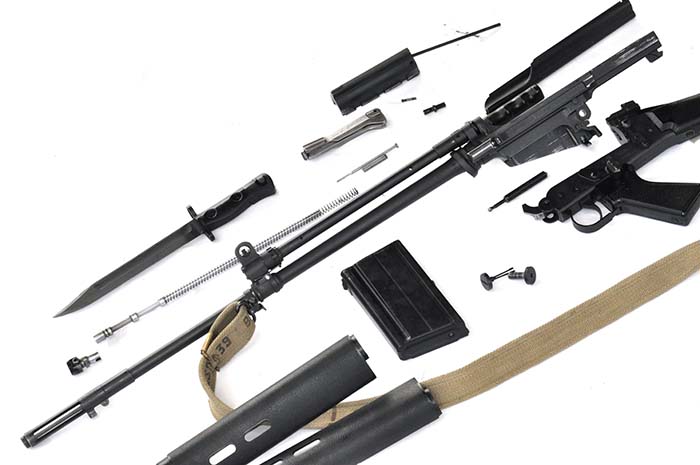
A completely stripped L1A1.

Conclusion

In essence the L1A1 (SLR) was/is a superb rifle, robust and more accurate than its main nemesis, the AK47, and when used by well-trained troops can negate the disadvantage of having to be cleaned (especially the gas piston) regularly. The rifle has relatively few moving parts and can be fully stripped by hand apart the case of a small screwdriver for disassembling the sights and special tool for the retainer spring (which did not need to be cleaned as well isolated in the stock), the chamber and the slide breech assembly body had some leeway, meaning that it could take a decent amount of dirt punishment before a jam occurred. All in all, an excellent and combat proven battlefield rifle.

This article first appeared in Small Arms Review V18N4 (August 2014)

Author

  • SAR Staff
    SAR Staff

    View all posts
Tags: 2014Anthony WicksAUGUST 2014Gabriele TansellaSelf Loading Rifle L1A1: The European “Black Rifle”V18N4
Previous Post

The U.S. M2 Carbine

Next Post

SITREP: V18N5

Next Post
SITREP: V19N1

SITREP: V18N5

TRENDING STORIES

  • The Alofs Reloading Magazine for Shotguns

    The Alofs Reloading Magazine for Shotguns

    0 shares
    Share 0 Tweet 0
  • The New Light and Handy Ruger American Generation II Ranch Rifle

    0 shares
    Share 0 Tweet 0
  • The Complete Guide To Colt M-16 Models: Part I

    0 shares
    Share 0 Tweet 0
  • True to Form: The Tisas 1911A1 ASF

    0 shares
    Share 0 Tweet 0
  • VALKYRIE ARMAMENT BELT-FED CONVERSION

    0 shares
    Share 0 Tweet 0

RECENT POSTS

SIG Sauer’s Full-Size Compact P365 “Fuse”

SIG Sauer’s Full-Size Compact P365 “Fuse”

June 27, 2024
The Importance of Offhand Shooting

The Importance of Offhand Shooting

June 25, 2024
BOOK REVIEW – The Collector’s Guide to the SKS

BOOK REVIEW – The Collector’s Guide to the SKS

June 20, 2024
True to Form: The Tisas 1911A1 ASF

True to Form: The Tisas 1911A1 ASF

June 18, 2024
Setting the Record Straight on the Fedorov Avtomat

Setting the Record Straight on the Fedorov Avtomat

June 6, 2024

QUICK LINKS

  • About Chipotle Publishing
  • About Small Arms Review
  • Advertise with Us
  • Write for Us

CONTACT DETAILS

  • Phone: +1 (702) 565-0746
  • E-mail: office@smallarmsreview.com
  • Web: www.chipotlepublishing.com
  • Chipotle Publishing, LLC 631 N. Stephanie St., No. 282, Henderson, NV 89014
Small Arms Review

FOLLOW US

  • Privacy Policy
  • Disclaimer

© 2022 Chipotle Publishing | All Rights Reserved

Welcome Back!

Login to your account below

Forgotten Password?

Retrieve your password

Please enter your username or email address to reset your password.

Log In

Add New Playlist

No Result
View All Result
  • Home
  • Articles
    • Guns & Parts
    • Suppressors
    • Optics & Thermals
    • Ammunition
    • Gear
    • News & Opinion
    • Columns
    • Museums & Factory Tours
    • ID Guides
    • Interviews
    • Event Coverage
    • Articles by Issue
      • Volume 1
      • Volume 2
      • Volume 3
      • Volume 4
      • Volume 5
      • Volume 6
      • Volume 7
      • Volume 8
      • Volume 9
      • Volume 10
      • Volume 11
      • Volume 12
      • Volume 13
      • Volume 14
      • Volume 15
      • Volume 16
      • Volume 17
      • Volume 18
      • Volume 19
      • Volume 20
      • Volume 21
      • Volume 22
      • Volume 23
      • Volume 24
  • The Archive
    • Search The Archive
  • Store
    • Books
    • Back Issues
    • Merchandise
  • Events
  • About
    • About Small Arms Review
    • About Chipotle Publishing
    • Contact Us
    • Other Publications
      • Small Arms Defense Journal

© 2022 Chipotle Publishing | All Rights Reserved

This website uses cookies. By continuing to use this website you are giving consent to cookies being used. Visit our Privacy and Cookie Policy.

Redirecting to External Website

You are leaving the Small Arms Review website and will be redirected to an external link in a 5 Seconds.
VISIT NOW!