


Small Arms Review
  • Home
  • Articles
    • Guns & Parts
    • Suppressors
    • Optics & Thermals
    • Ammunition
    • Gear
    • News & Opinion
    • Columns
    • Museums & Factory Tours
    • ID Guides
    • Interviews
    • Event Coverage
    • Articles by Issue
      • Volume 1
        • V1N1 (Oct 1997)
        • V1N2 (Nov 1997)
        • V1N3 (Dec 1997)
        • V1N4 (Jan 1998)
        • V1N5 (Feb 1998)
        • V1N6 (Mar 1998)
        • V1N7 (Apr 1998)
        • V1N8 (May 1998)
        • V1N9 (Jun 1998)
        • V1N10 (Jul 1998)
        • V1N11 (Aug 1998)
        • V1N12 (Sep 1998)
      • Volume 2
        • V2N1 (Oct 1998)
        • V2N2 (Nov 1998)
        • V2N3 (Dec 1998)
        • V2N4 (Jan 1999)
        • V2N5 (Feb 1999)
        • V2N6 (Mar 1999)
        • V2N7 (Apr 1999)
        • V2N8 (May 1999)
        • V2N9 (Jun 1999)
        • V2N10 (Jul 1999)
        • V2N11 (Aug 1999)
        • V2N12 (Sep 1999)
      • Volume 3
        • V3N1 (Oct 1999)
        • V3N2 (Nov 1999)
        • V3N3 (Dec 1999)
        • V3N4 (Jan 2000)
        • V3N5 (Feb 2000)
        • V3N6 (Mar 2000)
        • V3N7 (Apr 2000)
        • V3N8 (May 2000)
        • V3N9 (Jun 2000)
        • V3N10 (Jul 2000)
        • V3N11 (Aug 2000)
        • V3N12 (Sep 2000)
      • Volume 4
        • V4N1 (Oct 2000)
        • V4N2 (Nov 2000)
        • V4N3 (Dec 2000)
        • V4N4 (Jan 2001)
        • V4N5 (Feb 2001)
        • V4N6 (Mar 2001)
        • V4N7 (Apr 2001)
        • V4N8 (May 2001)
        • V4N9 (Jun 2001)
        • V4N10 (Jul 2001)
        • V4N11 (Aug 2001)
        • V4N12 (Sep 2001)
      • Volume 5
        • V5N1 (Oct 2001)
        • V5N2 (Nov 2001)
        • V5N3 (Dec 2001)
        • V5N4 (Jan 2002)
        • V5N5 (Feb 2002)
        • V5N6 (Mar 2002)
        • V5N7 (Apr 2002)
        • V5N8 (May 2002)
        • V5N9 (Jun 2002)
        • V5N10 (Jul 2002)
        • V5N11 (Aug 2002)
        • V5N12 (Sep 2002)
      • Volume 6
        • V6N1 (Oct 2002)
        • V6N2 (Nov 2002)
        • V6N3 (Dec 2002)
        • V6N4 (Jan 2003)
        • V6N5 (Feb 2003)
        • V6N6 (Mar 2003)
        • V6N7 (Apr 2003)
        • V6N8 (May 2003)
        • V6N9 (Jun 2003)
        • V6N10 (Jul 2003)
        • V6N11 (Aug 2003)
        • V6N12 (Sep 2003)
      • Volume 7
        • V7N1 (Oct 2003)
        • V7N2 (Nov 2003)
        • V7N3 (Dec 2003)
        • V7N4 (Jan 2004)
        • V7N5 (Feb 2004)
        • V7N6 (Mar 2004)
        • V7N7 (Apr 2004)
        • V7N8 (May 2004)
        • V7N9 (Jun 2004)
        • V7N10 (Jul 2004)
        • V7N11 (Aug 2004)
        • V7N12 (Sep 2004)
      • Volume 8
        • V8N1 (Oct 2004)
        • V8N2 (Nov 2004)
        • V8N3 (Dec 2004)
        • V8N4 (Jan 2005)
        • V8N5 (Feb 2005)
        • V8N6 (Mar 2005)
        • V8N7 (Apr 2005)
        • V8N8 (May 2005)
        • V8N9 (Jun 2005)
        • V8N10 (Jul 2005)
        • V8N11 (Aug 2005)
        • V8N12 (Sep 2005)
      • Volume 9
        • V9N1 (Oct 2005)
        • V9N2 (Nov 2005)
        • V9N3 (Dec 2005)
        • V9N4 (Jan 2006)
        • V9N5 (Feb 2006)
        • V9N6 (Mar 2006)
        • V9N7 (Apr 2006)
        • V9N8 (May 2006)
        • V9N9 (Jun 2006)
        • V9N10 (Jul 2006)
        • V9N11 (Aug 2006)
        • V9N12 (Sep 2006)
      • Volume 10
        • V10N1 (Oct 2006)
        • V10N2 (Nov 2006)
        • V10N3 (Dec 2006)
        • V10N4 (Jan 2007)
        • V10N5 (Feb 2007)
        • V10N6 (Mar 2007)
        • V10N7 (Apr 2007)
        • V10N8 (May 2007)
        • V10N9 (Jun 2007)
        • V10N10 (Jul 2007)
        • V10N11 (Aug 2007)
        • V10N12 (Sep 2007)
      • Volume 11
        • V11N1 (Oct 2007)
        • V11N2 (Nov 2007)
        • V11N3 (Dec 2007)
        • V11N4 (Jan 2008)
        • V11N5 (Feb 2008)
        • V11N6 (Mar 2008)
        • V11N7 (Apr 2008)
        • V11N8 (May 2008)
        • V11N9 (Jun 2008)
        • V11N10 (Jul 2008)
        • V11N11 (Aug 2008)
        • V11N12 (Sep 2008)
      • Volume 12
        • V12N1 (Oct 2008)
        • V12N2 (Nov 2008)
        • V12N3 (Dec 2008)
        • V12N4 (Jan 2009)
        • V12N5 (Feb 2009)
        • V12N6 (Mar 2009)
        • V12N7 (Apr 2009)
        • V12N8 (May 2009)
        • V12N9 (Jun 2009)
        • V12N10 (Jul 2009)
        • V12N11 (Aug 2009)
        • V12N12 (Sep 2009)
      • Volume 13
        • V13N1 (Oct 2009)
        • V13N2 (Nov 2009)
        • V13N3 (Dec 2009)
        • V13N4 (Jan 2010)
        • V13N5 (Feb 2010)
        • V13N6 (Mar 2010)
        • V13N7 (Apr 2010)
        • V13N8 (May 2010)
        • V13N9 (Jun 2010)
        • V13N10 (Jul 2010)
        • V13N11 (Aug 2010)
        • V13N12 (Sep 2010)
      • Volume 14
        • V14N1 (Oct 2010)
        • V14N2 (Nov 2010)
        • V14N3 (Dec 2010)
          • Ammunition
        • V14N4 (Jan 2011)
        • V14N5 (Feb 2011)
        • V14N6 (Mar 2011)
        • V14N7 (Apr 2011)
        • V14N8 (May 2011)
        • V14N9 (Jun 2011)
        • V14N10 (Jul 2011)
        • V14N11 (Aug 2011)
        • V14N12 (Sep 2011)
      • Volume 15
        • V15N1 (Oct 2011)
        • V15N2 (Nov 2011)
        • V15N4 (Jan 2012)
        • V15N5 (Feb 2012)
      • Volume 16
        • V16N1 (1st Quarter 2012)
        • V16N2 (2nd Quarter 2012)
        • V16N3 (3rd Quarter 2012)
        • V16N4 (4th Quarter 2012)
      • Volume 17
        • V17N1 (1st Quarter 2013)
        • V17N2 (2nd Quarter 2013)
        • V17N3 (3rd Quarter 2013)
        • V17N4 (4th Quarter 2013)
      • Volume 18
        • V18N1 (Jan Feb 2014)
        • V18N2 (Mar Apr 2014)
        • V18N3 (May Jun 2014)
        • V18N4 (Jul Aug 2014)
        • V18N5 (Sep Oct 2014)
        • V18N6 (Nov Dec 2014)
      • Volume 19
        • V19N1 (Jan 2015)
        • V19N2 (Feb Mar 2015)
        • V19N3 (Apr 2015)
        • V19N4 (May 2015)
        • V19N5 (Jun 2015)
        • V19N6 (Jul 2015)
        • V19N7 (Aug Sep 2015)
        • V19N8 (Oct 2015)
        • V19N9 (Nov 2015)
        • V19N10 (Dec 2015)
      • Volume 20
        • V20N1 (Jan 2016)
        • V20N2 (Feb Mar 2016)
        • V20N3 (Apr 2016)
        • V20N4 (May 2016)
        • V20N5 (Jun 2016)
        • V20N6 (Jul 2016)
        • V20N7 (Aug Sep 2016)
        • V20N8 (Oct 2016)
        • V20N9 (Nov 2016)
        • V20N10 (Dec 2016)
      • Volume 21
        • V21N1 (Jan 2017)
        • V21N2 (Feb Mar 2017)
        • V21N3 (Apr 2017)
        • V21N4 (May 2017)
        • V21N5 (Jun 2017)
        • V21N6 (Jul 2017)
        • V21N7 (Aug Sep 2017)
        • V21N8 (Oct 2017)
        • V21N9 (Nov 2017)
        • V21N10 (Dec 2017)
      • Volume 22
        • V22N1 (Jan 2018)
        • V22N2 (Feb 2018)
        • V22N3 (March 2018)
        • V22N4 (Apr 2018)
        • V22N5 (May 2018)
        • V22N6 (Jun Jul 2018)
        • V22N7 (Aug Sep 2018)
        • V22N8 (Oct 2018)
        • V22N9 (Nov 2018)
        • V22N10 (Dec 2018)
      • Volume 23
        • V23N1 (Jan 2019)
        • V23N2 (Feb 2019)
        • V23N3 (Mar 2019)
        • V23N4 (Apr 2019)
        • V23N5 (May 2019)
        • V23N6 (Jun Jul 2019)
        • V23N7 (Aug Sep 2019)
        • V23N8 (Oct 2019)
        • V23N9 (Nov 2019)
        • V23N10 (Dec 2019)
      • Volume 24
        • V24N1 (Jan 2020)
        • V24N2 (Feb 2020)
        • V24N3 (Mar 2020)
        • V24N4 (Apr 2020)
        • V24N5 (May 2020)
        • V24N6 (Jun Jul 2020)
        • V24N7 (Aug Sep 2020)
        • V24N8 (Oct 2020)
        • V24N9 (Nov 2020)
        • V24N10 (Dec 2020)
  • The Archive
    • Search The Archive
  • Store
    • Books
    • Back Issues
    • Merchandise
  • Events
  • About
    • About Small Arms Review
    • About Chipotle Publishing
    • Contact Us
    • Other Publications
      • Small Arms Defense Journal
  • Home
  • Articles
    • Guns & Parts
    • Suppressors
    • Optics & Thermals
    • Ammunition
    • Gear
    • News & Opinion
    • Columns
    • Museums & Factory Tours
    • ID Guides
    • Interviews
    • Event Coverage
    • Articles by Issue
      • Volume 1
        • V1N1 (Oct 1997)
        • V1N2 (Nov 1997)
        • V1N3 (Dec 1997)
        • V1N4 (Jan 1998)
        • V1N5 (Feb 1998)
        • V1N6 (Mar 1998)
        • V1N7 (Apr 1998)
        • V1N8 (May 1998)
        • V1N9 (Jun 1998)
        • V1N10 (Jul 1998)
        • V1N11 (Aug 1998)
        • V1N12 (Sep 1998)
      • Volume 2
        • V2N1 (Oct 1998)
        • V2N2 (Nov 1998)
        • V2N3 (Dec 1998)
        • V2N4 (Jan 1999)
        • V2N5 (Feb 1999)
        • V2N6 (Mar 1999)
        • V2N7 (Apr 1999)
        • V2N8 (May 1999)
        • V2N9 (Jun 1999)
        • V2N10 (Jul 1999)
        • V2N11 (Aug 1999)
        • V2N12 (Sep 1999)
      • Volume 3
        • V3N1 (Oct 1999)
        • V3N2 (Nov 1999)
        • V3N3 (Dec 1999)
        • V3N4 (Jan 2000)
        • V3N5 (Feb 2000)
        • V3N6 (Mar 2000)
        • V3N7 (Apr 2000)
        • V3N8 (May 2000)
        • V3N9 (Jun 2000)
        • V3N10 (Jul 2000)
        • V3N11 (Aug 2000)
        • V3N12 (Sep 2000)
      • Volume 4
        • V4N1 (Oct 2000)
        • V4N2 (Nov 2000)
        • V4N3 (Dec 2000)
        • V4N4 (Jan 2001)
        • V4N5 (Feb 2001)
        • V4N6 (Mar 2001)
        • V4N7 (Apr 2001)
        • V4N8 (May 2001)
        • V4N9 (Jun 2001)
        • V4N10 (Jul 2001)
        • V4N11 (Aug 2001)
        • V4N12 (Sep 2001)
      • Volume 5
        • V5N1 (Oct 2001)
        • V5N2 (Nov 2001)
        • V5N3 (Dec 2001)
        • V5N4 (Jan 2002)
        • V5N5 (Feb 2002)
        • V5N6 (Mar 2002)
        • V5N7 (Apr 2002)
        • V5N8 (May 2002)
        • V5N9 (Jun 2002)
        • V5N10 (Jul 2002)
        • V5N11 (Aug 2002)
        • V5N12 (Sep 2002)
      • Volume 6
        • V6N1 (Oct 2002)
        • V6N2 (Nov 2002)
        • V6N3 (Dec 2002)
        • V6N4 (Jan 2003)
        • V6N5 (Feb 2003)
        • V6N6 (Mar 2003)
        • V6N7 (Apr 2003)
        • V6N8 (May 2003)
        • V6N9 (Jun 2003)
        • V6N10 (Jul 2003)
        • V6N11 (Aug 2003)
        • V6N12 (Sep 2003)
      • Volume 7
        • V7N1 (Oct 2003)
        • V7N2 (Nov 2003)
        • V7N3 (Dec 2003)
        • V7N4 (Jan 2004)
        • V7N5 (Feb 2004)
        • V7N6 (Mar 2004)
        • V7N7 (Apr 2004)
        • V7N8 (May 2004)
        • V7N9 (Jun 2004)
        • V7N10 (Jul 2004)
        • V7N11 (Aug 2004)
        • V7N12 (Sep 2004)
      • Volume 8
        • V8N1 (Oct 2004)
        • V8N2 (Nov 2004)
        • V8N3 (Dec 2004)
        • V8N4 (Jan 2005)
        • V8N5 (Feb 2005)
        • V8N6 (Mar 2005)
        • V8N7 (Apr 2005)
        • V8N8 (May 2005)
        • V8N9 (Jun 2005)
        • V8N10 (Jul 2005)
        • V8N11 (Aug 2005)
        • V8N12 (Sep 2005)
      • Volume 9
        • V9N1 (Oct 2005)
        • V9N2 (Nov 2005)
        • V9N3 (Dec 2005)
        • V9N4 (Jan 2006)
        • V9N5 (Feb 2006)
        • V9N6 (Mar 2006)
        • V9N7 (Apr 2006)
        • V9N8 (May 2006)
        • V9N9 (Jun 2006)
        • V9N10 (Jul 2006)
        • V9N11 (Aug 2006)
        • V9N12 (Sep 2006)
      • Volume 10
        • V10N1 (Oct 2006)
        • V10N2 (Nov 2006)
        • V10N3 (Dec 2006)
        • V10N4 (Jan 2007)
        • V10N5 (Feb 2007)
        • V10N6 (Mar 2007)
        • V10N7 (Apr 2007)
        • V10N8 (May 2007)
        • V10N9 (Jun 2007)
        • V10N10 (Jul 2007)
        • V10N11 (Aug 2007)
        • V10N12 (Sep 2007)
      • Volume 11
        • V11N1 (Oct 2007)
        • V11N2 (Nov 2007)
        • V11N3 (Dec 2007)
        • V11N4 (Jan 2008)
        • V11N5 (Feb 2008)
        • V11N6 (Mar 2008)
        • V11N7 (Apr 2008)
        • V11N8 (May 2008)
        • V11N9 (Jun 2008)
        • V11N10 (Jul 2008)
        • V11N11 (Aug 2008)
        • V11N12 (Sep 2008)
      • Volume 12
        • V12N1 (Oct 2008)
        • V12N2 (Nov 2008)
        • V12N3 (Dec 2008)
        • V12N4 (Jan 2009)
        • V12N5 (Feb 2009)
        • V12N6 (Mar 2009)
        • V12N7 (Apr 2009)
        • V12N8 (May 2009)
        • V12N9 (Jun 2009)
        • V12N10 (Jul 2009)
        • V12N11 (Aug 2009)
        • V12N12 (Sep 2009)
      • Volume 13
        • V13N1 (Oct 2009)
        • V13N2 (Nov 2009)
        • V13N3 (Dec 2009)
        • V13N4 (Jan 2010)
        • V13N5 (Feb 2010)
        • V13N6 (Mar 2010)
        • V13N7 (Apr 2010)
        • V13N8 (May 2010)
        • V13N9 (Jun 2010)
        • V13N10 (Jul 2010)
        • V13N11 (Aug 2010)
        • V13N12 (Sep 2010)
      • Volume 14
        • V14N1 (Oct 2010)
        • V14N2 (Nov 2010)
        • V14N3 (Dec 2010)
          • Ammunition
        • V14N4 (Jan 2011)
        • V14N5 (Feb 2011)
        • V14N6 (Mar 2011)
        • V14N7 (Apr 2011)
        • V14N8 (May 2011)
        • V14N9 (Jun 2011)
        • V14N10 (Jul 2011)
        • V14N11 (Aug 2011)
        • V14N12 (Sep 2011)
      • Volume 15
        • V15N1 (Oct 2011)
        • V15N2 (Nov 2011)
        • V15N4 (Jan 2012)
        • V15N5 (Feb 2012)
      • Volume 16
        • V16N1 (1st Quarter 2012)
        • V16N2 (2nd Quarter 2012)
        • V16N3 (3rd Quarter 2012)
        • V16N4 (4th Quarter 2012)
      • Volume 17
        • V17N1 (1st Quarter 2013)
        • V17N2 (2nd Quarter 2013)
        • V17N3 (3rd Quarter 2013)
        • V17N4 (4th Quarter 2013)
      • Volume 18
        • V18N1 (Jan Feb 2014)
        • V18N2 (Mar Apr 2014)
        • V18N3 (May Jun 2014)
        • V18N4 (Jul Aug 2014)
        • V18N5 (Sep Oct 2014)
        • V18N6 (Nov Dec 2014)
      • Volume 19
        • V19N1 (Jan 2015)
        • V19N2 (Feb Mar 2015)
        • V19N3 (Apr 2015)
        • V19N4 (May 2015)
        • V19N5 (Jun 2015)
        • V19N6 (Jul 2015)
        • V19N7 (Aug Sep 2015)
        • V19N8 (Oct 2015)
        • V19N9 (Nov 2015)
        • V19N10 (Dec 2015)
      • Volume 20
        • V20N1 (Jan 2016)
        • V20N2 (Feb Mar 2016)
        • V20N3 (Apr 2016)
        • V20N4 (May 2016)
        • V20N5 (Jun 2016)
        • V20N6 (Jul 2016)
        • V20N7 (Aug Sep 2016)
        • V20N8 (Oct 2016)
        • V20N9 (Nov 2016)
        • V20N10 (Dec 2016)
      • Volume 21
        • V21N1 (Jan 2017)
        • V21N2 (Feb Mar 2017)
        • V21N3 (Apr 2017)
        • V21N4 (May 2017)
        • V21N5 (Jun 2017)
        • V21N6 (Jul 2017)
        • V21N7 (Aug Sep 2017)
        • V21N8 (Oct 2017)
        • V21N9 (Nov 2017)
        • V21N10 (Dec 2017)
      • Volume 22
        • V22N1 (Jan 2018)
        • V22N2 (Feb 2018)
        • V22N3 (March 2018)
        • V22N4 (Apr 2018)
        • V22N5 (May 2018)
        • V22N6 (Jun Jul 2018)
        • V22N7 (Aug Sep 2018)
        • V22N8 (Oct 2018)
        • V22N9 (Nov 2018)
        • V22N10 (Dec 2018)
      • Volume 23
        • V23N1 (Jan 2019)
        • V23N2 (Feb 2019)
        • V23N3 (Mar 2019)
        • V23N4 (Apr 2019)
        • V23N5 (May 2019)
        • V23N6 (Jun Jul 2019)
        • V23N7 (Aug Sep 2019)
        • V23N8 (Oct 2019)
        • V23N9 (Nov 2019)
        • V23N10 (Dec 2019)
      • Volume 24
        • V24N1 (Jan 2020)
        • V24N2 (Feb 2020)
        • V24N3 (Mar 2020)
        • V24N4 (Apr 2020)
        • V24N5 (May 2020)
        • V24N6 (Jun Jul 2020)
        • V24N7 (Aug Sep 2020)
        • V24N8 (Oct 2020)
        • V24N9 (Nov 2020)
        • V24N10 (Dec 2020)
  • The Archive
    • Search The Archive
  • Store
    • Books
    • Back Issues
    • Merchandise
  • Events
  • About
    • About Small Arms Review
    • About Chipotle Publishing
    • Contact Us
    • Other Publications
      • Small Arms Defense Journal
No Result
View All Result
Small Arms Review
No Result
View All Result
Home Articles

Tech Spec: V20N1

by SAR Staff
January 1, 2016
in Articles, Articles by Issue, Columns, Guns & Parts, News & Opinion, Search by Issue, V20N1 (Jan 2016), Volume 20
Tech Spec: V20N1
Share on FacebookShare on Twitter

By Rick Vasquez

“80% Receivers” Myths and Truths

INTRODUCTION

In the world of firearms there are many unique firearms and many techniques in which a firearm can be made. A modern trend in the manufacturing process of firearms is to use what is called an “80% firearm receiver,” which is a partially complete casting or metal form that resembles a firearm. Recent opinions and rulings from the Bureau of Alcohol, Tobacco, Firearms and Explosives (ATF) have created controversy on whether or not it is legal to make firearms from these items. In the following article, we will dispel the myths and elaborate on the truths of the laws and regulations pertaining to these so-called 80% firearms receivers.

What is an 80% receiver?

For ATF regulatory purposes there is no such thing as an 80% firearm receiver. It is either an item that is not classified as a firearm or an item that has reached a stage of manufacturing in which ATF can classify it as a firearm. It is ATF’s responsibility, based on statutes and previous classifications, to subjectively determine if an item can be classified as a firearm. Additionally, all machining processes are not required to be completed to be classified as a firearm. When a laymen thinks of a firearm they think of a weapon that can be loaded with a cartridge mounted in the hand or shoulder and fired. Also, it can be a weapon completely dis-assembled and the weapon is a bare receiver with all of the correct mounting holes to assemble a complete firearm. On the other hand a partially complete casting can neither be loaded to shoot nor assembled with components to fire a shot. So what is it called if it’s incapable of function as a firearm as defined by conventional standards?

Historically the basis of where this “80% receiver” concept originated is twofold. First, manufacturers are always trying to find ways to save money in the manufacturing processes. If a manufacturer could purchase a partially complete firearm casting or forging from a metals distributor they could cut cost by reducing their manufacturing time and personnel. Second, hobbyists want to tinker and make their own firearms from scratch. So if they could start with an object where specialized tools were not needed they could make their own firearm. To ensure that castings they were making were not firearms, these manufacturers began sending casting/forgings, or machined objects in various stages to ATF to determine if they had not been completed minimally enough so as to not be classified as firearm.

To understand the basis of these classifications it is imperative to understand what is defined as a firearm under federal statutes and the basis for ATF’s classification. A firearm is defined under Title 18, United States Code, section 921(a)(3) as follows:

(A) any weapon (including a starter gun) which will or is designed to or may readily be converted to expel a projectile by the action of an explosive;
(B) the frame or receiver of any such weapon;
(C) any firearm muffler or firearm silencer; or
(D) any destructive device.

Such term does not include an antique firearm. To understand the classification of these partially complete castings/flats, and for simplicity they will from here forward be called an “80% receiver”.

When a person or industry wants a formal classification of an item related to firearms it is sent to ATF’s Firearms Technology and Industry Branch (FTIB). Using the definitions of firearm in the Gun Control Act, The Code of Federal Regulations and previous classifications FTIB will render an opinion on whether the item submitted is a firearm or not. Two of the main portions of the definition of a firearm used in an opinion are: is it readily convertible or has it reached a stage in manufacturing in which it could classified as firearm receiver. It does not have to be complete to be regulated as a firearm receiver.

These items are submitted to FTIB and the technicians evaluate the items for ease of converting to fire a cartridge or in the case of 80% receiver, could it be converted to a firearm receiver with basic hand tools and a limited amount of time. These are critical opinions because of the regulations governing the commerce of firearms. Often FTIB is criticized for the opinions they make on the classification of an item. If FTIB is too rigid in their analysis they are criticized by the firearms industry and hobbyists. If they are too lenient in their opinions then they are criticized from the legislatures. Generally, as can be seen by what has been called an 80% receiver the technicians at FTIB are more than fair. Once an opinion has been gained that the item is not regulated as a firearm and it can be sold and distributed as an 80% receiver, a non-firearm.
Types of 80% receivers

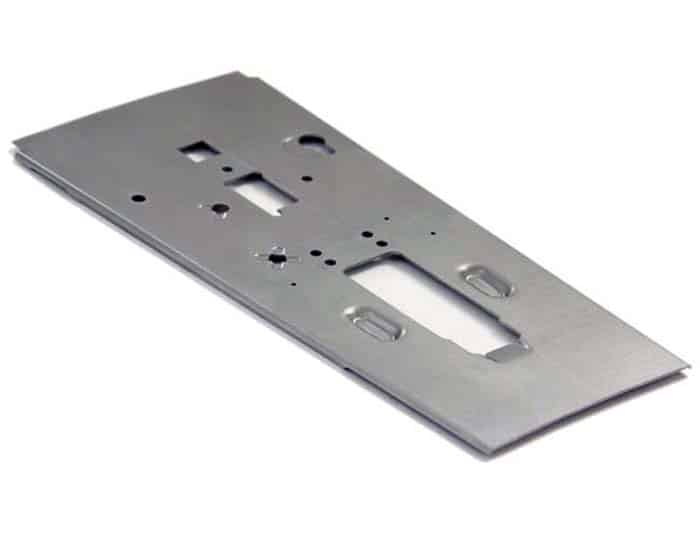
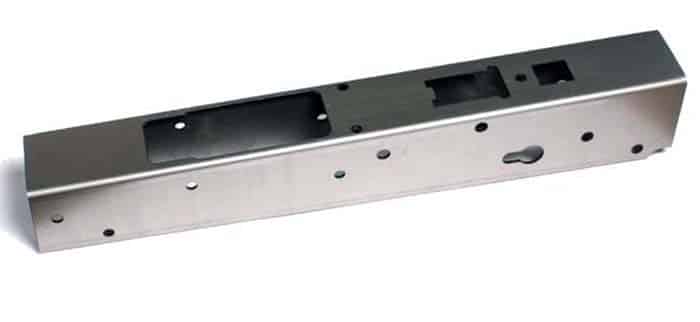
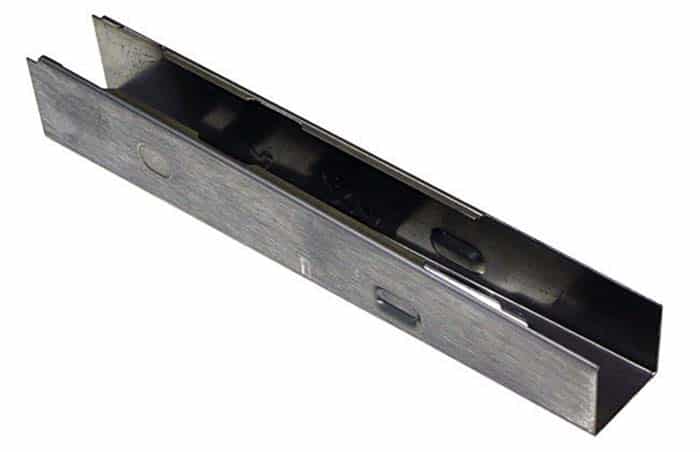
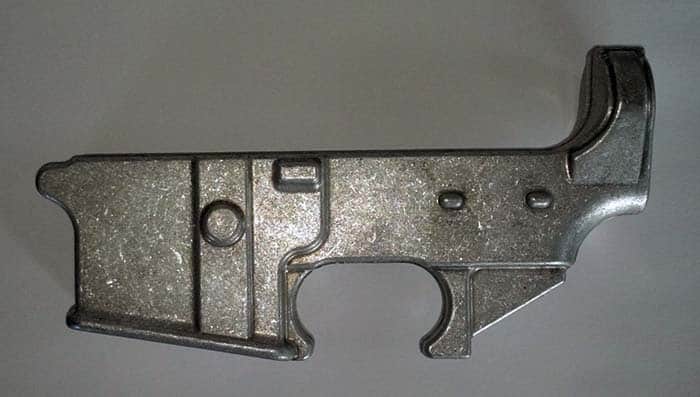
There are many types of 80% firearms being marketed but we will focus on the two which have created the most impact, and that is the AK type and the AR type. Many manufacturers of these items do not receive an opinion from ATF and simply make their 80% receiver based on ATF opinions other manufacturers have posted online, or simply cut certain areas of a casting and call it an 80% receiver. For AR 80 percenters there are solid castings that are equal to a solid piece of aluminum with no machining completed, just poured or cast into the shape of an AR receiver. Then there are a variety of partially machined castings identified as 80% receivers. In the AK family there are raw channels in the shape of an AK receiver without any machining, frame flats with all of the necessary holes drilled in that can be bent into the shape of an AK, and channel centers that replace the center of an AK receiver. These are the 80% receivers that have been classified by ATF as non-firearms and can be sold without any transfer requirements. Of course there are the 80% receivers being marketed that are actually classified as firearms.

All Photos taken by RV

A raw casting is a solid piece of aluminum molded into the shape of a firearm. The vast majority of raw castings being marketed are for AR type firearms. These castings are very inexpensive and manufacturers with advanced CNC machinery purchase these to make a complete AR type receiver. They are generally not purchased by the home builder because they require time consuming milling operations.
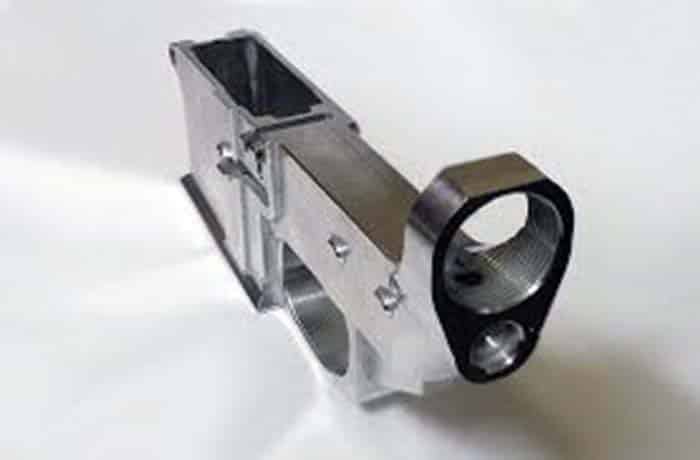
80% percent receivers are not as easy to complete as you may believe. Many of the major cutting operations are completed on an approved 80% receiver. Generally you need at the minimum a desk top mill/drill and a set of receiver guides to ensure all of the holes you drill are aligned, and all the metal required to be milled out is correct. Remember, in accordance with ATF instruction any cutting, drilling or milling on this 80 % receiver makes it a firearm. (ATF letter of instruction https://www.atf.gov/content/contact-us/pressroom/receiver-blanks-Q%26As)

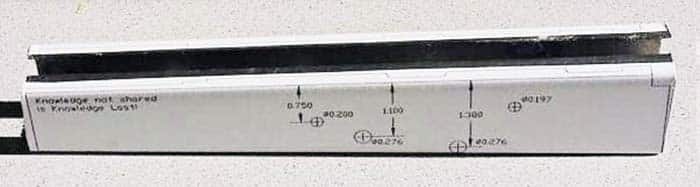
Generally an AK Channel is a channel bent and shaped as an AK receiver. It does not have any holes or dimples because ATF counts dimples as holes. A person would glue a sticky back template to the channel then drill out all of the holes necessary.

The 80% AK flat can be bent with bending guides readily purchased on the internet. There are not any specialized tools other than a hydraulic press needed to bend one of these flats. All assembly holes are in proper location. Once a flat is bent into the shape of an AK receiver it becomes a firearm; THIS IS A FIREARM!

Can I make my own firearm and what are the regulations?

Many questions and urban legends come up when an individual without an FFL starts thinking of making a weapon for himself. Is it legal to complete an 80% receiver into a firearm? And what other concerns should I have in building a personal firearm such as placing marking? The answer is: it is absolutely legal. Under Federal regulations an individual can make any firearm regulated by the Gun Control Act (GCA) without a license or authority from ATF. The GCA regulates all firearms but generally sporting firearms are what a person is going to build for personal use. Additionally there are no marking requirement for an individual to mark a firearm made for personal use which is regulated solely by the GCA. However, Firearms regulated by the National Firearms Act (short barrel rifles, silencers, etc.) can only be made when authority has been granted from ATF through the proper application to make a NFA firearm.
The marking requirements under the GCA are found in the Statute and in the Code of Federal Regulations. These requirements do not tell you that an individual does not have to mark a personal use firearm but it tells you who must mark a firearm and how. This is the statute or the law and does not indicate an un-licensed person has to mark a firearm he makes for his own use: Title 18, U.S.C, section 923(i) Licensed importers and licensed manufacturers shall identify, by means of a serial number engraved or cast on the receiver or frame of the weapon, in such manner as the Attorney General shall by regulations prescribe, each firearm imported or manufactured by such importer or manufacturer. (Page 23 firearms regulations guide)

The additional marking requirements are found in Title 27, Code of Federal Regulations, § 478.92 How must licensed manufacturers and licensed importers identify firearms, armor piercing ammunition, and large capacity ammunition feeding devices? (a) (1) Firearms. You, as a licensed manufacturer or licensed importer of firearms, must legibly identify each firearm manufactured or imported as follows: (i) By engraving, casting, stamping (impressing), or otherwise conspicuously placing or causing to be engraved, cast, stamped (impressed) or placed on the frame or receiver. 1 The regulation expand the requirements and explain that a manufacturer and or importer must apply the manufacturer/importers name, model if assigned, caliber or gauge and city and state where the manufacturer is located. Add country of origin for an imported firearm. (Page 50 firearms regulations guide) Once again the regulations found in 27 CFR do not require a firearm made by an unlicensed individual to be marked in any manner. If you decide to make a firearm for personal use ensure there are no state restrictions on the firearm you intend to make prior to beginning your build.
ATF Ruling 2015-1

Because of the frequency that ATF has seen 80% receivers made into firearms and used in trafficking schemes, ATF posted ATF ruling 2015-1. This ruling has redefined the definition of a firearm and the definition of manufacturing. FTIB wrote in its previous opinion that once an object was approved as an 80% receiver any modification even as simple a drilling an indexing hole would turn that 80% receiver into a firearm. Possessors of these 80% receivers would drill or mill a hole then according to ATF it became a firearm. These new firearms were then taken to gunsmiths or machinists and completed on professional machinery. With ATF ruling 2015-1 this process has now been classified as a manufacturing function. If you take an 80% receiver to your gunsmith to complete they will be required to be licensed as a manufacturer, mark it with all required markings, and then transfer it to you to complete all transfer requirements. This ruling has not been challenged but signs indicate it will be challenged in the near future.

Making and selling firearms without a license

There are those who believe they have found a niche in which they can make and sell firearms from 80% receivers to make a few dollars. Though the regulations authorize a person to liquidate a personal collection without a license, the act of intentionally making firearms for sale requires a license. The regulations specifically state that if you are manufacturing firearms for the purpose of commerce you must be licensed: Title 18 U.S.C. 922(a)(1)(A) It shall be unlawful – for any person – except a licensed importer, licensed manufacturer, or licensed dealer, to engage in the business of importing, manufacturing, or dealing in firearms, or in the course of such business to ship, transport, or receive any firearm in interstate or foreign commerce. The regulations also defines a manufacturer as: 18 U.S.C. 921(a)(10) The term “manufacturer” means any person engaged in the business of manufacturing firearms or ammunition for purposes of sale or distribution; and the term “licensed manufacturer” means any such person licensed under the provisions of this chapter. This is a fairly broad net that a person can be caught in if they are making firearms without a license and then selling the firearms. If you make 1 firearm with the intent of selling it for profit you could theoretically be charged with manufacturing/dealing without a license.
As previously stated there is no restriction for selling personal weapons nor is there a time limit that you must have possessed a weapon before it is sold. However, FFLs are restricted on the time limit of transferring a personal weapon they transferred to themselves from their license. The regulations in 27CFR, section 478.125a, restrict a dealer from selling firearms from his personal weapons collection until it has been in his personal records for 1 year (Page 66 firearms regulations guide). There have been incidents in which ATF personnel have told individuals that if they made their own weapon they could not sell it until they possessed it for one year. This is incorrect as there is nothing in the regulations or statutes in which this is stated. That being said there have been several cases brought against individuals because they either did not understand the regulations or they disregarded the regulations. If you intend to make and sell firearms you must be licensed and you must abide by all regulatory requirements such as marking firearm and keeping good books.

What are the issues created by making unmarked and distributing unmarked firearms from 80% receivers?

For the personal firearm builder that likes to tinker there is no issue. A few of these unmarked firearms made by hobbyists enter the market annually. The larger issue that has brought scrutiny on these homemade firearm is the trafficking of unmarked AR and AK type firearms made from 80% receivers. Criminals do not abide by firearms laws and their misuse of firearms creates notoriety for the law abiding citizen. Firearms made from 80% receivers have become a weapon of choice for traffickers.

Traffickers are continuously attempting to acquire firearms to maintain control of their drug market and area of operation. Continuously using straw purchase techniques and purchasing used guns is a time consuming exercise. What if it were possible to set up a facility to purchase 80 % receivers both AK and AR type, purchase parts that have no control or regulations, and begin making their own firearms? This has happened and will continue to happen. There have been many major investigations by several law enforcement agencies on organized operations making thousands of AR and AKs that were either already delivered or being made to be delivered to trafficking organizations.
Everything about making a firearm without regulations is not unique to the tinkerer that wants to create their own weapon. It is also point of interest to the trafficker that wants to acquire firearms that are untraceable or are easy to acquire. From personal observations this is not hype on the misuse of these homemade firearms. In my previous experience I had the great opportunity to support U.S Law enforcement and foreign law enforcement in identifying firearms used in criminal activity both in the U.S. and throughout Central America, Mexico and Colombia. These homemade firearms are becoming prolific in each of these countries.

Conclusion

If a person is interested in making a firearm for personal use you are well within your rights to do so. When you decide that you want to make firearms to sell you should ensure you understand all Federal and State regulations prior to beginning your endeavor.

This article first appeared in Small Arms Review V20N1 (January 2016)

Author

  • SAR Staff
    SAR Staff

    View all posts
Tags: 2016JANUARY 2016Rick VasquezTech SpecV20N1
Previous Post

Legally Armed: V20N1

Next Post

DRD TACTICAL’S “KIVAARI”™ RIFLE: .338 Lapua Magnum Take-Down Rifle

Next Post
DRD TACTICAL’S “KIVAARI”™ RIFLE: .338 Lapua Magnum Take-Down Rifle

DRD TACTICAL’S “KIVAARI”™ RIFLE: .338 Lapua Magnum Take-Down Rifle

TRENDING STORIES

  • The Alofs Reloading Magazine for Shotguns

    The Alofs Reloading Magazine for Shotguns

    0 shares
    Share 0 Tweet 0
  • The New Light and Handy Ruger American Generation II Ranch Rifle

    0 shares
    Share 0 Tweet 0
  • The Complete Guide To Colt M-16 Models: Part I

    0 shares
    Share 0 Tweet 0
  • True to Form: The Tisas 1911A1 ASF

    0 shares
    Share 0 Tweet 0
  • VALKYRIE ARMAMENT BELT-FED CONVERSION

    0 shares
    Share 0 Tweet 0

RECENT POSTS

SIG Sauer’s Full-Size Compact P365 “Fuse”

SIG Sauer’s Full-Size Compact P365 “Fuse”

June 27, 2024
The Importance of Offhand Shooting

The Importance of Offhand Shooting

June 25, 2024
BOOK REVIEW – The Collector’s Guide to the SKS

BOOK REVIEW – The Collector’s Guide to the SKS

June 20, 2024
True to Form: The Tisas 1911A1 ASF

True to Form: The Tisas 1911A1 ASF

June 18, 2024
Setting the Record Straight on the Fedorov Avtomat

Setting the Record Straight on the Fedorov Avtomat

June 6, 2024

QUICK LINKS

  • About Chipotle Publishing
  • About Small Arms Review
  • Advertise with Us
  • Write for Us

CONTACT DETAILS

  • Phone: +1 (702) 565-0746
  • E-mail: office@smallarmsreview.com
  • Web: www.chipotlepublishing.com
  • Chipotle Publishing, LLC 631 N. Stephanie St., No. 282, Henderson, NV 89014
Small Arms Review

FOLLOW US

  • Privacy Policy
  • Disclaimer

© 2022 Chipotle Publishing | All Rights Reserved

Welcome Back!

Login to your account below

Forgotten Password?

Retrieve your password

Please enter your username or email address to reset your password.

Log In

Add New Playlist

No Result
View All Result
  • Home
  • Articles
    • Guns & Parts
    • Suppressors
    • Optics & Thermals
    • Ammunition
    • Gear
    • News & Opinion
    • Columns
    • Museums & Factory Tours
    • ID Guides
    • Interviews
    • Event Coverage
    • Articles by Issue
      • Volume 1
      • Volume 2
      • Volume 3
      • Volume 4
      • Volume 5
      • Volume 6
      • Volume 7
      • Volume 8
      • Volume 9
      • Volume 10
      • Volume 11
      • Volume 12
      • Volume 13
      • Volume 14
      • Volume 15
      • Volume 16
      • Volume 17
      • Volume 18
      • Volume 19
      • Volume 20
      • Volume 21
      • Volume 22
      • Volume 23
      • Volume 24
  • The Archive
    • Search The Archive
  • Store
    • Books
    • Back Issues
    • Merchandise
  • Events
  • About
    • About Small Arms Review
    • About Chipotle Publishing
    • Contact Us
    • Other Publications
      • Small Arms Defense Journal

© 2022 Chipotle Publishing | All Rights Reserved

This website uses cookies. By continuing to use this website you are giving consent to cookies being used. Visit our Privacy and Cookie Policy.

Redirecting to External Website

You are leaving the Small Arms Review website and will be redirected to an external link in a 5 Seconds.
VISIT NOW!